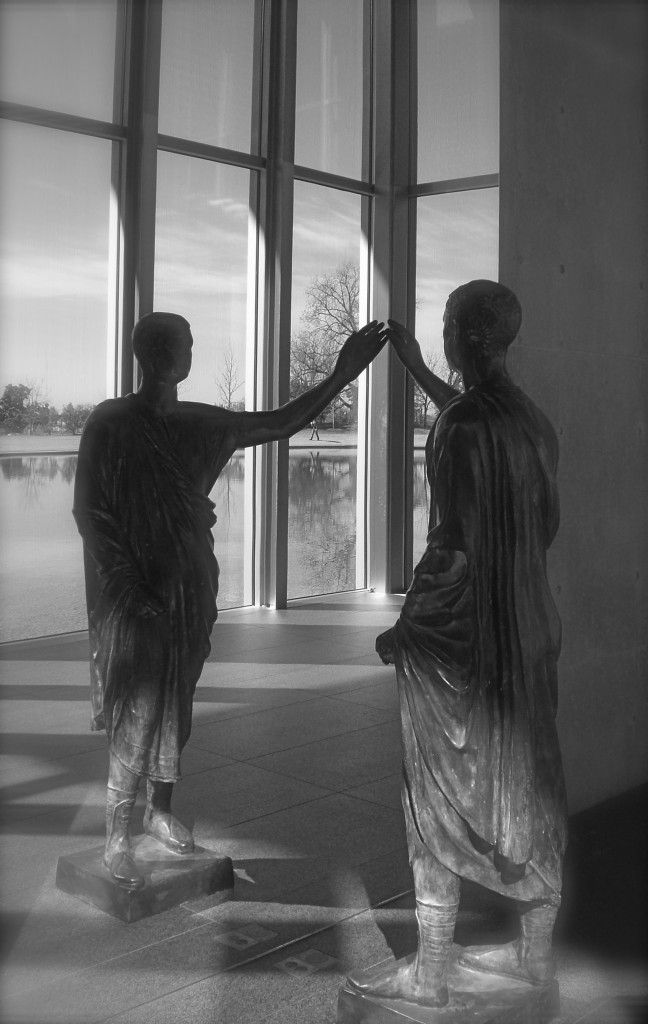
A CHANGING PROFESSION

Derek Maschek

MASCHEK design and fabrication
www.maschekdf.com

ah, the good ol' days

I’ve been a bit verbose recently, opining at length in blog format. So, this time I’m opting to post a question, or maybe a short series of questions.

It’s the consensus of the industry (design and construction and everybody around it), that Architecture as a profession is undergoing a change, a shift, an evolution into something else. I’ve heard it said several times that architects won’t be around in 10-15 years! How could that be?! COULD that be?!

So, here are the questions…

1) Is there a change afoot? If “yes”, continue, otherwise you are done.
2) If so What’s changing? Maybe it’s a number of things.
3) What’s causing the change? Software? Reduced services? Inadequate Compensation?
4) Is this change for the better or worse?
5) If it’s for the better, how can we capitalize on it?
6) If it’s for the worse, what can we do to stop it, if anything?

I have my theories, but they’re just theories…

leaderspeak: is your check engine light on? by nicholas kreitler
 Have you ever been driving down the road and all of a sudden a little sport car goes flying past you? I started thinking about that car the other day after I was wrapping up a day in the office. I was picturing that car cruising along, oblivious to the fact that it was blowing a whole lot of smoke and causing a mess for everyone else to navigate through. I smiled when I passed that car pulled over on the side of the road, realizing if only they had taken better care of their car it wouldn’t have happened. For the purpose of this piece, let’s just say they ran out of gas.

 I normally don’t like using analogies to make my point but this time I am going to make an exception. For the past year I have been in and out of so many offices searching for a place to start my career, just like every other recent graduate out there. Through that time, I have had the opportunity to see various offices and the character and culture of each. This has allowed me to gain a better understanding of what an office environment is really like compared to anything my professors tried to explain. The analogy came to me when I was reflecting back over my experiences from the past several months and the thought of that little car came to mind.

I’m sure you’re wondering where I am going with this, right? Well, what I mean by that is that an engine runs on gas and oil. If you consider the oil as the collaborative and creative side of an office, while the gas in the tank as the productive side that keeps the office running, you’ll get this analogy. The point is that you need both of those to keep the car operating, so keep that in mind when you start the engine on your firm.

Think about this; if you run with too much oil and not enough gas, you just end up in a big cloud of smoke while you’re stranded on the side of the road. This means when you spend all your time thinking and playing without proper production, you just end up breaking down and on the side of the road with your thumb out asking for a ride. The opposite is equally devastating, too much gas and not enough oil, you end up going really far but burn out after that recommended oil change. What I mean is if you are only productive and don’t take time to play, then you lose your passion for what you do and quickly stop caring about the task at hand.

The right balance for everyone is different. Each firm has their own ratio that works for the culture they have created. A particular amount of oil to every gallon of gas is critical, some work better with a drop and some take it by the quart. Every firm is unique and there is no exact science to the right ratio but there does need to be balance. Finding that balance and individuals who believe in the culture of the office will keep it running smoothly and it is those firms that will stand the test of time. Now there will always be other factors to consider, but when the firm has a shared vision and believes in what they are doing they will always find a way to make it work.


careerspeak: 5 hints for recent graduates by nicholas kreitler
Every school has a different way of teaching their students, some take an approach focused on theory, some do it on practical experience, and some try to take a balanced approach. Each of these have their advantages and disadvantages, but I’m not looking to discuss the curriculum. I’d like to discuss some of the things that were left out. Sometimes there are just things that only real world experience can teach you. Now I am far from knowing everything, if I know anything at all, but I have a seen a few glimmers of hope on the horizon and that continues to keep me motivated. I have found that we are all searching for our place in this ever changing world and a little advice is never a bad thing.

1.  NETWORKING
A very important aspect to connect with the design community is getting out and meeting new people that share your passion. There are groups all around the area, each of them with their own focus and agendas, but their common goal is to promote the awareness of design in the community. Some of the best conversations I have had are at various speaking events and happy hours. These conversations could range anywhere from talking about what could be done for housing in an urban environment to an hour and half conversation about a brick, and what it means to the city. These conversations are a great way to get connected and meet new people that might be able to help you along your way. This is not to say you should expect anybody to just give you something but it helps to create a personal relationship with others in the industry, because you never know what it may lead to.

2. STAY PASSIONATE
This one is simple; you wouldn’t have made it through 5 years of architecture school if you didn’t love what you were doing. So be sure to maintain that passion when you leave school. This could be something as simple as creating theoretical projects for you to work on, studying for exams, sketching for an hour a day, learning a new program, or build something. A lot of young architects are still looking for work or have been let go, and while the average age of the firm continues to rise staying passionate about architecture can be tough. So while you might be out of work you might want to stay active, because you know the question that will come up in an interview is “what have you been doing lately?” how you answer that question has an effect of how you are perceived so keep that in mind.

3. GET INVOLVED
This is a big city; there are plenty of groups out there and lots of events for you to be involved in. I always get asked how I know when there is something going on, and a lot of it has to do with being connected. There are lots of groups out there that broadcast when they have an event coming up or are getting together, and that’s because they want people to come out and get involved in what they are doing. This could be something as simple as going out to a lecture at the local college, grabbing a drink at a bar with other professionals in the industry to talk about a proposed project, or even just find a cause or organization that you care about and asking how you can help. Your options are limitless, but they are what you make of them and sitting at home on a Wednesday night in front of the tv isn’t doing much for your career.

4. INFORMATIONAL INTERVIEWS ARE A GOOD THING
The simple truth is if your fresh out of school and you don’t have much experience if you have any at all. After a few months of sending out resumes and cover letters, I was starting to get exhausted by it all. I had to start thinking harder about what I was doing and if it were really the right thing, and I realized I’m only sending a piece of paper. I wanted them to get to know me, and although I am able to get a bit of that across when sending out that cover letter it isn’t completely me. There are a lot of factors that go in to getting that first job, not only are they looking at your education and your professional experience, but they want to know you and make sure your the right fit for the firm. Each firm has its own personality, culture, and identity so finding the right individual for the firm requires a balance of skills and personality. The informational interview is what allows them to get to know you on that personal level and hopefully get your foot in the door.

5. COFFEE IS YOUR FRIEND
This should be pretty self explanatory, that added boost of caffeine will keep you going hour after hour you sit at your desk late at night or early in the morning when you have to get that last detail done before the deadline. But going out to get that cup of coffee will get you up from your desk, get some fresh air, and brings you back with a renewed spirit and increased energy so you can focus on the task at hand. So enjoy that cup and get back to work.

careerspeak: how to sell YOU! by Kimberly Reuther
I know we keep discussing the bad economy but in reality, it is a shifted economy that we now live in.  As with the weather patterns, the rules of business have changed and will change again in the future.  The one thing that remains constant is the need to “sell” yourself to potential employers, clients, and business associates.

My philosophy on self-promotion and marketing is somewhat different than most.  I don’t believe in shameless self-promotion, I abhor it actually.  I believe in being informative and helping people.  Here are a few things I picked up in my career that I hope will resonate with you as you enter your next working relationship.

1.  know your audience – I believe this is an essential technique for success.  Put yourself in the other person’s shoes.  Ask questions, pay attention to subtle clues and adjust your message accordingly.

For business dealings, make sure you aren’t pitching an expensive remodel to someone who is looking for DIY advice.  For a job interview, it is important to learn more about the company than they know about you.  It is as much an interview of them as it is of you.  

2.  know your strengths –  There comes a time in your career where you are comfortable with what you don’t know and are confident with what you do know.  Don’t be afraid to call in someone else when you are in over your head.

Your clients and boss will respect you that much more when you complete the project on time with the help of someone else versus costly mistakes to your client or employer. 

3.  keep it real, keep it personal – People do business with people they like.  Simple.  Be friendly and personal in all of your professional dealings.  Don’t be afraid to let your sense of humor and little quirks slip into the conversation.  Work doesn’t need to be so formal & serious all of the time, we’re not brain surgeons!

You are a unique individual and promoting what makes you special will get you far in life.

4.  expand your network – A common phrase is “it’s all about who you know.”  Fortunately, it is true, especially, in a smaller city like St. Louis.  This city is full of amazing people and they often aren’t found in your generic networking seminars.  Don’t underestimate the importance of getting outside your “circle” to meet new people.

Listen to those around you; get involved in larger organizations and causes greater than your own.

5.  admit when you are wrong – I think this is essential to being successful in business as well as in life.  We don’t always make the right choices, even with the best intentions.  It’s okay.  Own your successes and failures and learn from them.  Doing so will make you a better business partner, team member or employee.

Every thing that has happened to you has gotten you to this moment and shaped you into who you are.

LeaderSpeak: Marketing & Branding

November was another great month for DesignSpeak, as we launched a new discussion series for design professionals, LeaderSpeak!  We plan to hold these every other month with rotating speakers and topics.

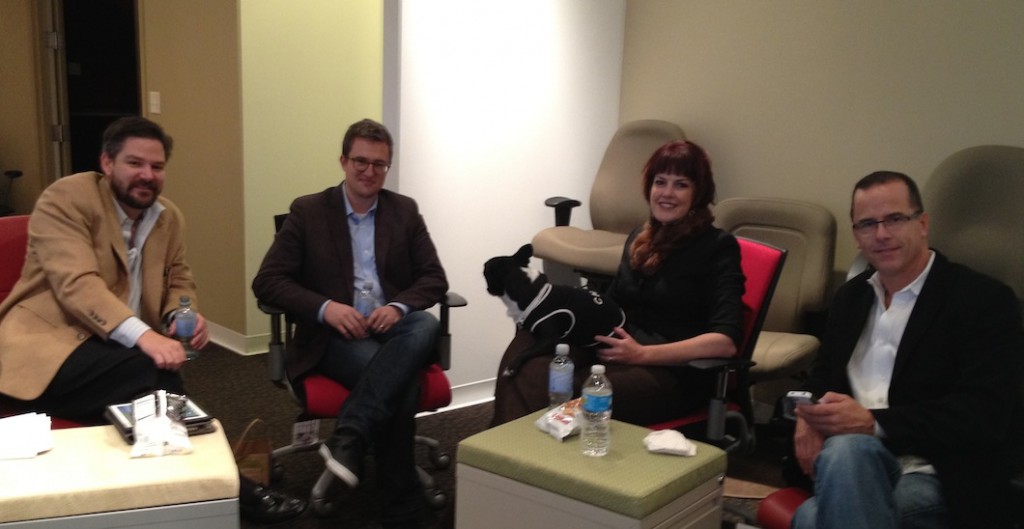
Our first topic on Marketing & Branding was a great success!  We were very fortunate to have such talented people for our first panelist lineup.  We really appreciated David, Nate, Araceli and Tom for being so open and offering insight into their marketing strategies.  Also, a huge thank you to Global Furniture for hosting the event with us!  Their showroom looked fabulous and turned out to be a great source for seating our crowd!

David, Nate, Araceli (& Bella Rue), and Tom offered fantastic insights to the group!

Meet our panelists:

L. David James, III – Read DesignSpeak’s bio for David
Hospitality & Senior Living Sales Team Leader at Colt Industries
visit Colt’s website

Araceli Kopiloff-Zimmer – Read DesignSpeak’s bio for Araceli
owner of Rue Lafayette
visit Rue Lafayette’s website

Tom Niemeier – Read DesignSpeak’s bio for Tom
owner of SPACE Architecture + Design
visit SPACE’s website

Nathan Sprehe – Read DesignSpeak’s bio for Nate
owner of Almanac A Design + Marketing Studio
visit Almanac’s website

Great idea to hold the event in a showroom full of comfortable chairs!

From my perspective, the key points to take from the event were these:

– Be authentic and real in your professional dealings.

– Ask and you never know what doors may open for you.

– It really is about who you know; building relationships is more important than ever.

– Find a niche that plays to your strengths and core values.

Our hosts Tom (far left) and Cate (far right) were wonderful!

We hope you enjoyed the event and we’re looking forward to many more intriquing discussions in 2012!

Related Posts Plugin for WordPress, Blogger...