2012: year of orange by kimberly reuther
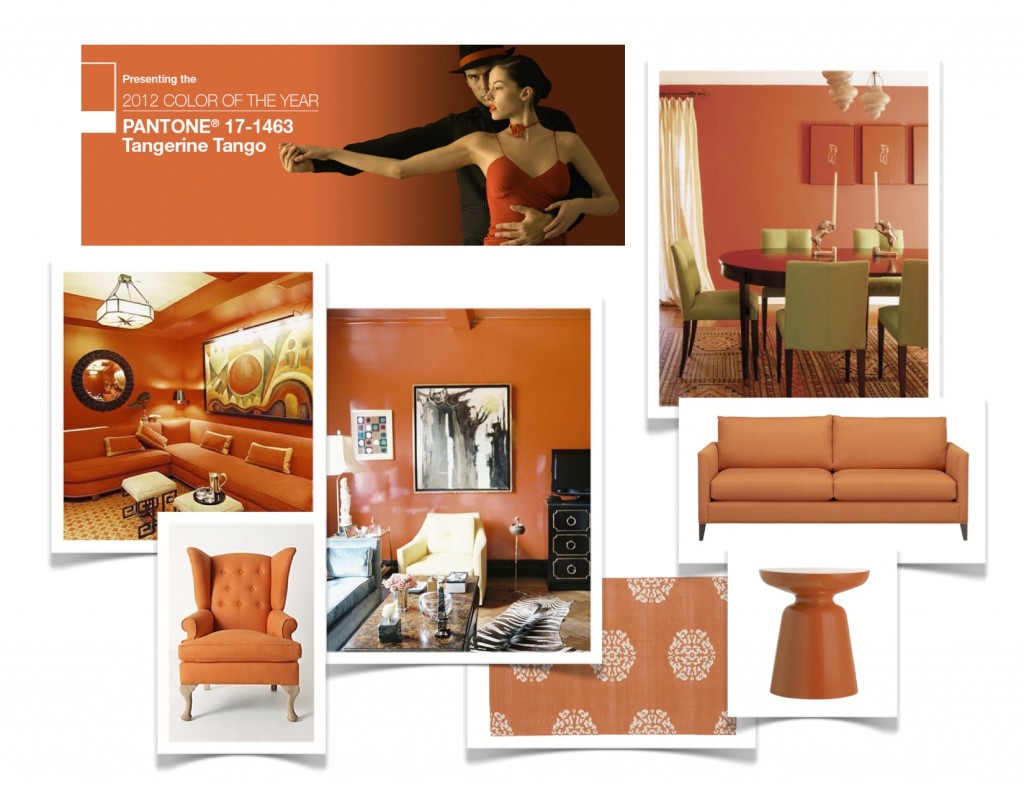
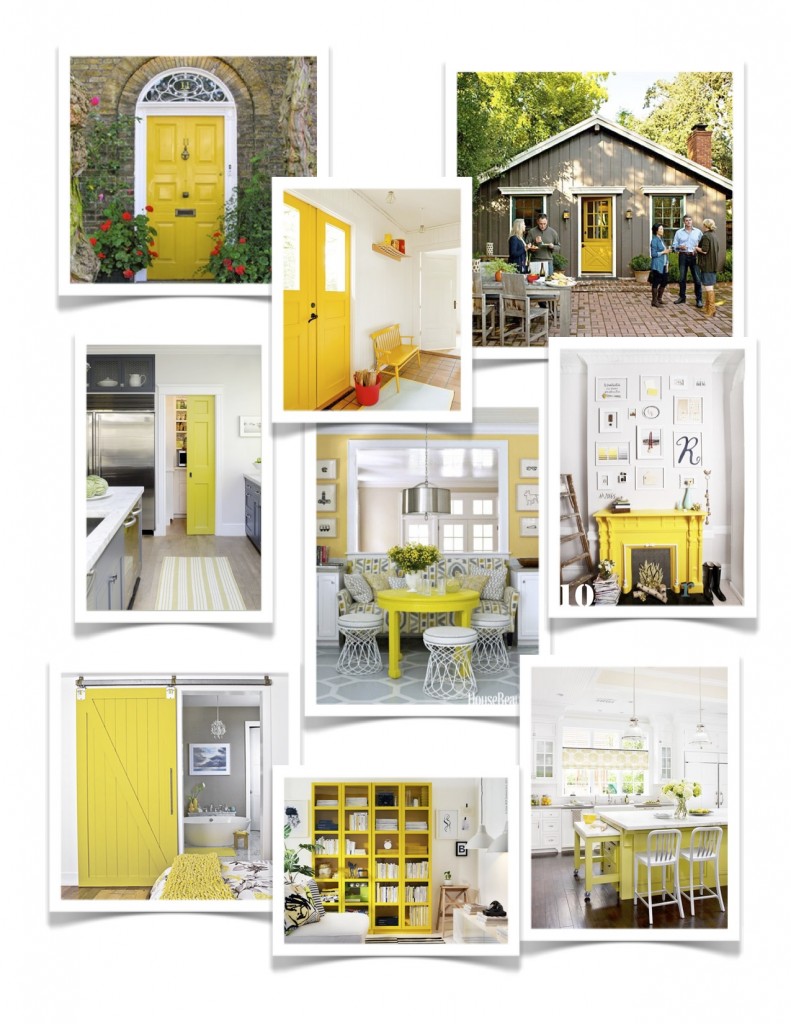
Hello Orange!  Tangerine Tango has been chosen the color of the year by Pantone.  What a fresh start to 2012!  Orange can be a very tricky color, people usually love it or hate it.  Well, let’s take a closer look at its merits and I bet you’ll start to warm up!

Orange has the energy and vibrancy of red but without the dramatic undertones.  Orange has the spirit and sunny qualities of yellow but it is equally grounded in earthiness.  It plays well with other colors but sometimes can’t help but stealing the show.  So, now how do you live with orange?

– Go big or go home!

If you are a lover of orange and bold choices, then by all means, saturate a room in this splendid hue!  Tip:  When painting with a dark color, using semi-gloss paint will reflect light and keep from closing in the space.

– A little color goes a long way.

If you want to add a pop of color to your room, here are a few ideas to try.  Tip: Make sure to incorporate the color in at least three places to carry the effect.

– The more the merrier!

If you want to balance the boldness of the orange, why not add a few more colors to the mix?  Tip: Use patterns or solids but make sure you give each color enough weight to create cohesion in the space.

– Explore new directions.

Draw from fashion, change the hue a little, use the color to spark your own personality.  Tip: Paint and small accents are the easiest pieces to update if you like to follow trends.

Have fun incorporating this fresh color into your home!

the holiday season: a celebration of light by juliana schafer
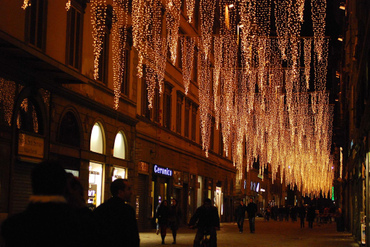
Every year, between November and January, there are many aesthetics that come to mind. For some, it is the colors red and green, for others a well decorated tree, but probably the most powerful thing is the presence of light. A certain romantic atmosphere of twinkling lights that appeal more to our hearts rather than our critical minds.

 In looking at different displays, I was inspired by some creative ones such as this north pole scene in Japan featured below.

 It is a time of year when everybody is designer, carefully conscious of whether their exterior lighting expresses the things they wish to experience this season: beauty, joy, and peace. But even though one house may be decorated more sensibly than another, you still have to admit that it is the collective displaying of lights that is essential to producing a truly magical effect.

It occurred to me that holiday lighting is the single most symbolic expression of unity during the holiday season. So as we wrap up 2011 and head into the new year, let us remember to continue appreciating light the way we do around the holidays. Let us become inspired to guide it, filter it, and produce it in ways that are meaningful to us.


did you bloom with color?

I apologize I am just getting around to posting recaps of some of our amazing events this spring/summer!  Here are highlights from our appreciation event for designers this past May…

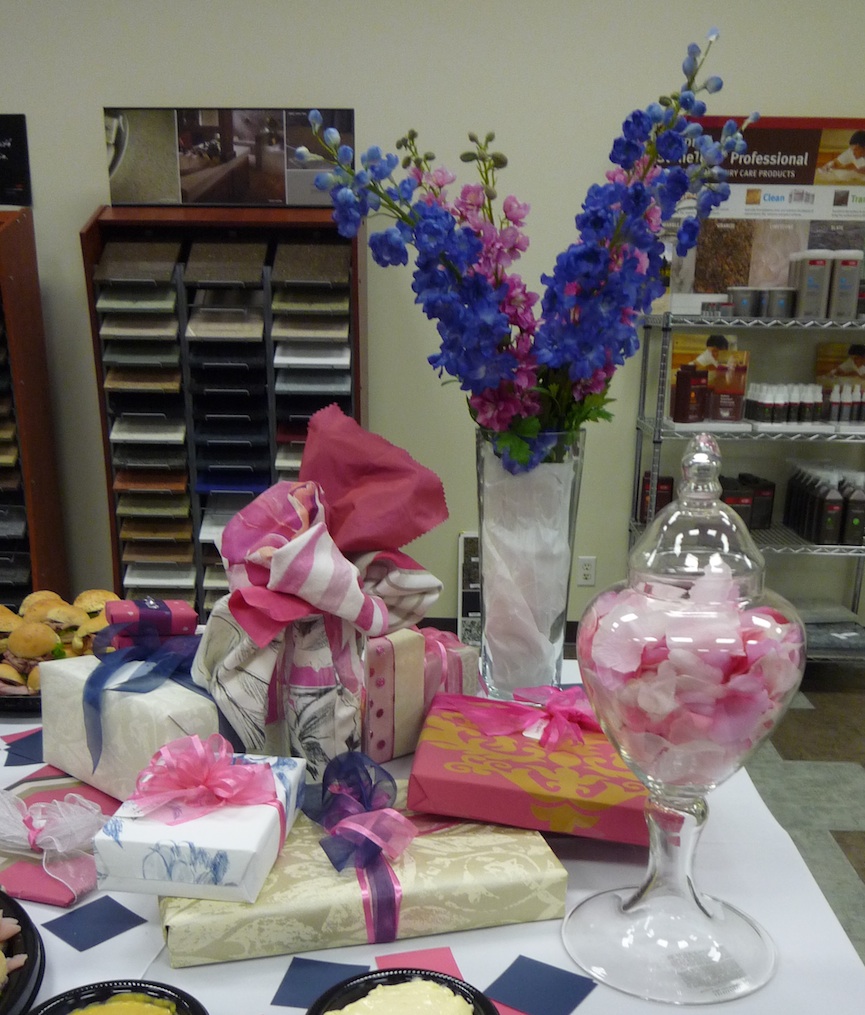
I first have to extend a HUGE thank you to all who participated in our outstanding colorbloom event!!!  Our first collaboration with Sherwin Williams was a lot of fun!  Colt Industries really stepped up as an gracious host; what a great space!

I could not have done this without my right hand girl Vicki Dreste of Victoria Dreste Designs!  She was nothing short of amazing at helping me execute our pink & blue vision!

Lastly, we really appreciate the participation of these wonderful vendors to help make the whole event a success!


Visit their websites: Sherwin Williams, Colt IndustriesDesign & Detail Trade Showroom, Pottery Barn at Plaza Frontenac, Paperdolls Boutique in Kirkwood, Traveling Tea, Stimulus Baking Company

When we first came up with the idea to host an thank you event for designers, I thought it was a great idea.  I secretly love the honeysuckle pink that was chosen by Pantone as the color of the year and what a perfect way to show it off!

A royal wedding table (2 days before the big day), loads of beautiful fabrics, a colorful slideshow, lovely fashion collection from a local boutique and colorful cupcakes all in the wonderful honeysuckle & denim hues!  Spectacular! Design inspiration, food and fun were a great mix!  Thank you to all who attended!

Hope we can do it again next year!

DIY Wedding Story by Andrea Beckman

Whenever I post a blog, I try to do it on something that signifies the notion of “blooming where you’re planted.”  Whether it is through design or another form, it’s about finding a way to live beautifully in the situations and places in which we reside.  So when my dear friends, Brandi and Ryan asked me to help with their wedding centerpieces & decor, I was thrilled!  Not only was I thrilled to embrace the creative challenge & bring their vision to life, I thought it would make a perfect “bloom where you’re planted story!”

When taking on the challenge I knew it would be a “DIY” project, I just wasn’t sure what I would be doing/creating exactly.  This brings me to the centerpieces which truly set the tone for the rest of the design and were definitely hands on!  The centerpieces all stemmed from Brandi’s vision & love of nature.  “First I decided on a color, which obviously had to be green since it’s my fave.  When considering what to use, I kept coming back to a “natural” theme – I love nature, it’s where we find the most beautiful and natural life.”


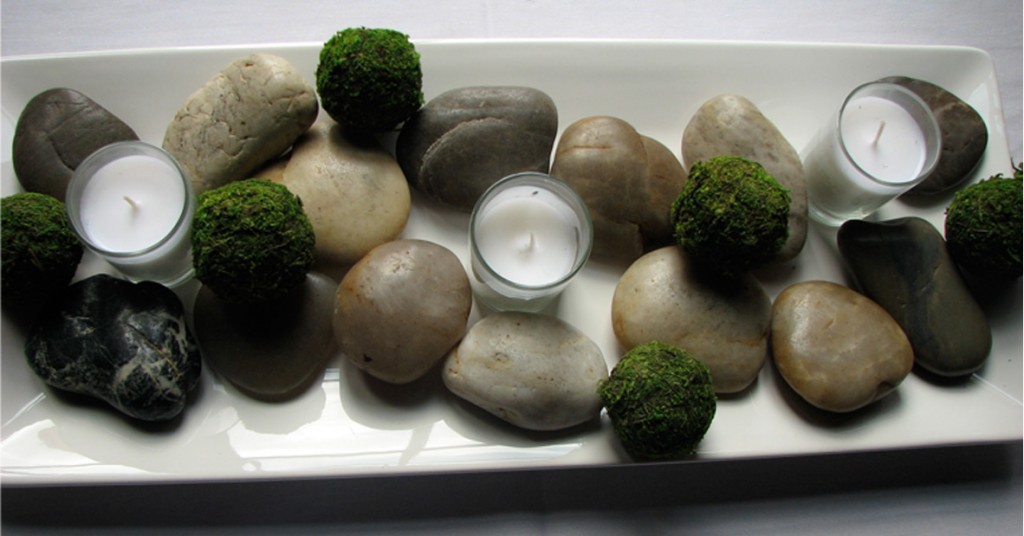
INSPIRATION PHOTO


Brandi came across this photo when searching for “natural” centerpieces and immediately liked the moss and rocks, however she felt it was missing something.  “I felt it needed something more so I eventually came to the idea of bamboo.  I wanted to use bamboo because it reflects me and Ryan’s personalities – it’s sort of a “zen” idea.  I have found that I’m in my most meditative state when in nature.”

Perfect, so it was decided…moss, rocks and bamboo!  Brandi had a very clear vision.  Her vision included moss in the shape of a circle with rocks (smaller than what’s shown in the picture) & three stalks of bamboo in the center.  Now for the tricky part, how to give that life & create a balanced composition while honoring Brandi’s clear vision.  I know what you’re thinking…what’s so hard about that?  Believe me I had my challenges…or were those just personal challenges?  Either way it took me awhile!  I played with many different concepts…different vase sizes, colors, shapes, heights, additional foliage and so on.  Oh, and that does not even include all of the different moss I tried to seek out and experiment with!  This is no complaint, just acknowledging that even the most minimal of designs require a great deal of thought.


Building the moss bases!


CONSTRUCTING THE BASE MOLD


I began with using round card board that is used for cake bases.  These would have to be transported so I needed to have some sort of base.  I used foam to create my mold for the moss.  I wanted all of the moss bases to look as natural as possible and this helped to create the illusion of thick, plush moss.


FORMING MOSS AROUND BASE


I used a preserved moss that was not on a sheet, it was a rich green and retained much of its native looking state.  Because it did not come on a sheet/netting I felt it was easier to fashion around the base, particularly because it was thicker and not perfectly flat.  It already has some depth of its own which again contributed to a more plush look.  Of everything I did, this part was the messiest and the most challenging.  When I say messy I mean it!  I literally went to bed once with a few green fingers.. remains from the moss that had been stuck to my fingers via glue.  There may have also been some moss stuck in my hair.  After this incident I switched glues!  None the less I prided myself in trying to create the most plush and natural looking moss bases possible.  I even began to imagine that I was this highly skilled artisan/sculptress/? who was the only person capable of creating such lush and alive looking moss.  It was my mission!

Because I am oh so great at procrastinating I was shamefully still creating some of the bases the morning of…AWWW!  Luckily I recruited a dynamite team to help me on the big day because I knew I would need it!


EMILY RUGGERI & AMY BECKMAN HARD AT WORK


Meet the team:

Emily Ruggeri – Interior Designer:  Emily is one of my close friends and is great at improvising and taking the ball and running with it.  I wasn’t sure what type of improvising we would need to do the day of, but I knew I needed a hand on deck that I could trust!

Amy Beckman – Twin Sis:  Amy is great help, has a good eye but proved to be slightly crazy with the design stuff in the heat of the moment..another story!

Patrick Beckman – Dad:  Long-time trusty assistant, just as long he’s following my orders…Just kidding!! but seriously.  Pat ran errands and was a huge help!

Linda Beckman – Mom:  Linda was on clean up/packing duty and food control.  When the team needed to hydrate and re-fuel with pizza, Linda was on it!


5 MIN. BREAK...PIZZA!! LOADING UP THE CAR


Now for the fun stuff


BEFORE


AFTER


AFTER


CAKE TABLE


I liked the idea of using Queen Anne’s Lace for accent foliage because of it’s minimal and airy feel.  It worked out perfectly because it was actually the flower used on the invites and it really tied everything together.


MISC. DECOR


VIEW TO PATIO


FLOATING CANDLES & GRASS FOR COCKTAIL TABLES, MISC. DECOR


MISC. DECOR


BAR DECOR


The Ceremony


CEREMONY LOCATION


Brandi and Ryan were married this past May down by the bank of a lake under Ryan’s homemade arbor.  The wedding was on Miss Tennie’s property – Sweet Briar.  Miss Tennie is 94 years old and a close friend of the family, bride and groom.  Ryan used to cut the grass out at the property as a teenager.  “To get married there really had a lot of personal meaning to us.”


THE GROOM CONSTRUCTED THE ARBOR HIMSELF!


RECEPTION


This wedding truly exemplified what it means to “blooming where you’re planted.”  Making the most of what you love, your surroundings and resources.  I had so much fun working with Brandi and the gang on this wedding.  It truly was beautiful and a fulfilling experience that I will cherish always!


Style Defined: Tropical by Kimberly Reuther
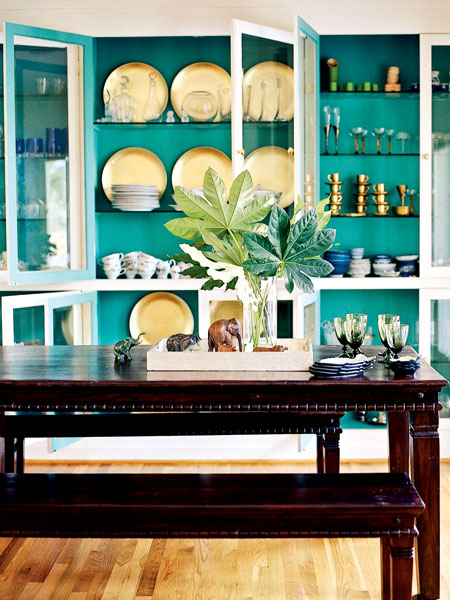
As we approach the heat of the summer months, I am inspired by the tropics where it is warm all year round.  The ocean is near, palm trees are in abundance and daily life is about staying cool.  The vacation-inspired vibe is envious and actually pretty accessible in your own home.  Here a few photos and tips to help you achieve your own oasis!

1.  Crisp white color palettes are always refreshing and fairly easy to achieve.  Using a semi-gloss paint on walls and floors is more reflective and easier to keep clean.  White linen slipcovers and gauzy drapery panels evoke the casual, relaxed atmosphere of the tropics.

2.  MIxing bold, bright colors and multiple patterns are easy ways to create the drama and intensity of the sun.  Saturate your walls or floors with an intense hue derived from the sea or refinish multiple picture frames for a quick colorful collage.

3.  Incorporating natural and organic elements into your design will create a sense of harmony.  Sisal or seagrass make perfect rugs in high traffic areas.  Palm trees and tropical flowers are increasingly popular indoors even as far inland as Missouri.  If nothing else, create your tropical retreat in an outdoor area which can be put away during winter months.

Previously written by Kimberly for St. Louis AT HOME’s website.  Read more of Kimberly’s work and view her portfolio at www.kimberlyreuther.com.

Working With An Interior Designer by Victoria Dreste
Gone are the days of the interior designer who comes sweeping into your home declaring everything hideous and demanding the removal of everything you own.

Today a designer is more likely to meet with you, ask questions about your likes and listen carefully to what you have to say, helping you to discover your personal style.

If you are the kind of person who finds it difficult to communicate what you like but are definite about what you do not like, good. That is a great place to start.

Your sofa doesn’t have to look like every other sofa you see. Furniture, area rugs and window treatments can all be produced to exact specifications. A professional will design and customize your home to define and achieve your style.

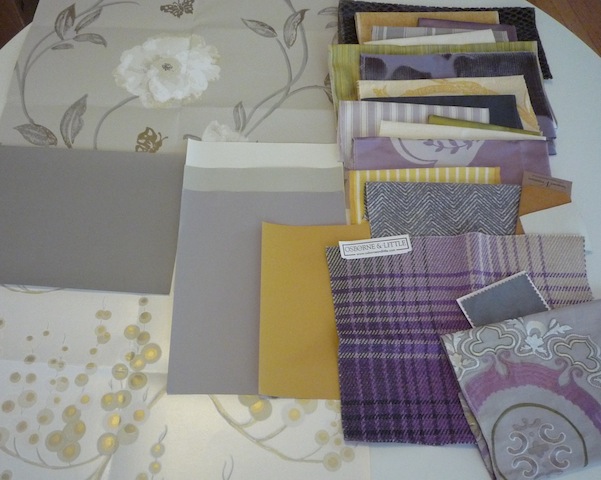
Working with a designer gives you the opportunity to purchase from sources that are specific to designers and architects. This bedroom has fabrics and wall coverings from Osborne & Little.

This gorgeous bedroom was customized with the client’s collection of framed botanicals. I also love the rustic beams with the sophisticated chandelier.

This living room setting includes furniture with custom finishes. Selecting specific finishes allows you to design the exact look you want for your home. 

In this sitting room new furniture is mixed with vintage to create a slightly bohemian style.

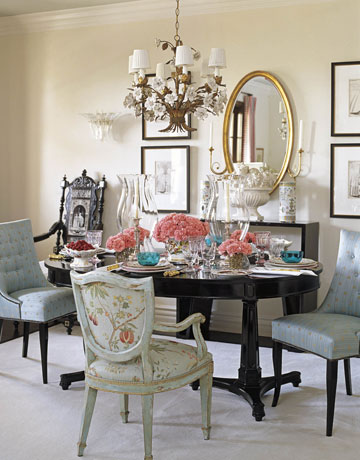
A mix of furniture and fabrics create a chic dining style. 

With the guidance of an interior designer you can have a home that is your personal style.

You can see more of Vicki’s work here.

Area Rug Inspiration By Victoria Dreste
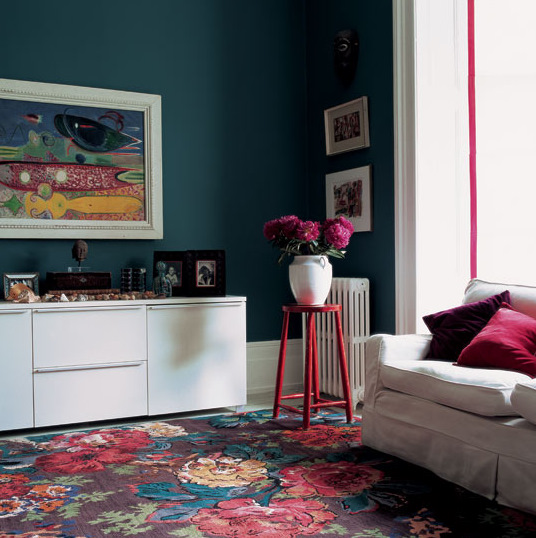
Thinking of buying an area rug? What will it do for your room?

A rug can define the areas of a large room. It can add definition to a small room.

Color, pattern and texture are important elements in interior design. An area rug can add each of these to a room. A rug. of course is about texture. A beautiful rug over a tile or wood floor adds texture and softness. The texture is also great for acoustics and ambiance.  The texture of the rug will absorb sound and create a more comfortable room.

The color palette for a room can be determined from the colors of a rug you love and purchase. In the rug you will find the colors for walls, furniture, window treatments, lighting and accessories.  If you choose a rug with a strong pattern you can add furniture and fabrics in solids and still have an interesting room.

A rug with a pastel palette enhances the look of this creamy white room.

The deep green of the walls is an accent color found in the Peacock patterned rug.

The classic key pattern is updated for this contemporary rug.

A beautiful blue fretwork pattern adds elegance.

The green leaf pattern with a brown background grounds the room and establishes the color palette.

A monochromatic modern setting is brought to life with a bold, bright area rug.

A traditional Ushak pattern in deep blue is a wonderful contrast to the aged pine table.

A rug with a lovely floral pattern is complimented by deep teal walls and white furnishings.

In this room the rug is there to compliment the beautiful, rich wood of the walls and furniture.  The pattern is interesting but it doesn’t overwhelm the space.

The vibrant swirl pattern adds boldness to an otherwise sedate room.

Modern elements in a traditional setting bring an updated, fresh style.

When adding an area rug find one that you love. You can design your room around your amazing new purchase.

Photos from The Rug Company You can see more from Vicki here.

Bottom Line: White Kitchen Countertops by Kimberly Reuther
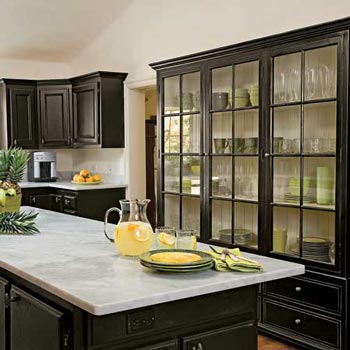
You’ve seen them everywhere lately, it seems.  No, I’m not talking about holiday decorations (although that is true, too).  I’m talking about white countertops, mainly marble.  They are in design magazines, on TV shows, in hotels & restaurants and even your neighbor’s newly renovated kitchen.  They are beautiful and alluring yet you are wondering if they are right for your home with 3 kids, 2 pets and a less than tidy husband.  But mainly you are asking yourself, “what’s the bottom line?”.

Kitchen Inspiration

Kitchen Inspiration

Here is some insight into the more popular choices and how they work with your lifestyle and your budget.

White Marble: Marble is a very porous natural stone and is less durable than granite, which is why it is isn’t commonly used in American kitchens.  It is prone to scratching, staining and chipping.  While it is very beautiful, there is a good amount of maintenance that keeps it looking that way.

All natural stone needs to be sealed (and re-sealed periodically) to keep out moisture and resist staining but it is not an impenetrable shield.  You have to be more careful with marble and acidic liquids (lemon juice, red wine) which will stain or etch the marble.  Also, some bath products, like sugar scrubs will etch marble.  It is a good idea to always use a cutting board, both to protect the sealer and your knives as well as guard against bacteria.  Lastly, use hot pads or trivets to protect the stone from heated cookware.  Of note: most marble is available polished or honed (matte) and has a variety of edge options.

Before you get discouraged, keep in mind that Europeans have been using marble for sculptures, building facades and of course countertops for centuries.  It has proven that it will stand the test of time, it just won’t look the same as the day it was installed.  Here are two of my favorites:

Carrera Marble: This is a more readily available white marble with a slight grey cast.  Slabs will very greatly from light grey to a mid tone grey.  There is a lot of soft movement in the dark grey veining; some slabs maybe more “busy” than others.  It is very important to hand-select your slabs to your personal taste.  Carrera marble looks beautiful with polished nickel fixtures and is available in a range of coordinating tiles to complete the space.

Price Range: approx. $70 – $80/sq. ft.*

Close-up of Carrera Marble

Carrera Marble Bathroom Countertop

Calacata Marble:  If you are looking for a creamier white marble with warmer, taupe or camel colored veins, this is it.  These marble slabs are more exotic and therefore come with a much higher price tag and possibly longer lead times.  You also want to hand-select this stone as it has a lot of variation.  Nonetheless, from a designer’s perspective, Calacata marble has such an exquisite aesthetic that it almost doesn’t compare.

Price Range: approx. $120 – $150/sq. ft*

Close-up of Calacata Marble

Calacata Marble Kitchen Countertop

Quartzstone:  Manufactured quartz has become an increasingly popular choice in recent years, for both commercial and residential projects.  It is more durable than granite, does not have to be sealed, requires little or no maintenance, is anti-bacterial, has multiple edge options and some colors even include recycled content.

Manufacturing stone to give it the best possible features & benefits is a little like gene mutation to me.  However, once I saw slabs of this installed, I was very impressed.  I do think the granite-looking color choices need a bit more work but they have really excelled at the marble and limestone alternatives.  In fact, they keep getting better at it.  I often refer clients to explore these options as alternatives to white marble if maintenance is a major concern.

Price Range: approx. $65 – $95/sq. ft.*

Caesarstone Misty Carrera: One of the first of its kind and still a favorite.  It’s soft grey background with darker grey veins has a subtle movement that fools the eye into thinking it may be marble.  It is available in both honed and polished finishes.

Close-up of Caesarstone Misty Carrera

Caesarstone Countertop

Zodiaq Bianco Carrera: I love this because they have succeeded in adding large scale movement to a manufactured product.  It is also of the creamy white family which is rare to find and is equally stunning in traditional or contemporary applications.

Close-up of Zodiaq Bianca Carrera

Zodiaq Countertop

Concrete:  Want something more modern & less busy? I have to mention this because I am also a fan of this material for several reasons.  I own a white concrete countertop (2 years & counting) and it is beautiful and durable.  It was manufactured by a St. Louis company and it is made of concrete in the form of a powder.  They are able to make any color out of a paint fan deck, can make integral sinks, and have several unique edge options.  They mix it together, mold it, put a sealer on it and deliver it just like a regular countertop, no on-site pouring.  It is not porous so it doesn’t need to be resealed as often as natural stone, it is stronger than granite, has recycled content and is made here locally so it is very good for the environment.   I had them do a custom “pure white” for me and I love how the color turned out.  Of note: different finishes are available but there is no movement or veining in this product.

Price Range: approx. $70 – $80/sq. ft.*

My white concrete countertop

Bottom Line:  Americans tend to base their selections on how well things “age” and we are inclined to replace things without letting them age “gracefully”.  Keeping longevity and your budget in mind will help you make the best selection for your lifestyle.

*Note: pricing by square feet is for general use and is best for budgeting purposes.  Actual pricing for your project depends on a lot of variables including size, cutouts, edge options, color, etc.  Pricing estimates provided by CK Concrete, Hallmark Stone & ISC Surfaces

Originally written by Kimberly for AT HOME’s website.  View the post here.  You can see more of Kimberly’s work here.


“Gray’s Anatomy” by Kimberly Reuther

Gray is a significant neutral color that often gets overlooked in favor of the more dramatic black or the happier camel shades.  However, this year, gray is the belle of the ball.  It is enjoying a resurgence in fashion, home design and luxury style.  So, what makes gray such a fabulous color and how do you use it in your home?

The color gray is unique in that the two extremes evoke completely different emotions.  The lightest shade of soft silver is cool, airy and works with fresh color palettes.  Deeper, more intense shades of gray offer new possibilities to a space and provide nurturing comfort.  Another selling point is the color’s ability to play well with others.  Introducing a pop of color (almost any color fits) creates a more dynamic and inviting space.

Another wonderful attribute of this color is it’s ability to transcend defined styles.  Gray can be rustic, masculine, sensual, rich, velvety, casual, contemporary, modern, feminine, traditional, and the list goes on & on.  It is also a wonderful backdrop for colorful artwork as well as a popular choice for candid & architectural photographs.

In light of all these qualities, how can we live without it?

If you are still unconvinced, here a few photos to illustrate my points…stay tuned for Q & A after the images.

Q. What if I don’t want to paint my walls gray?

A.  Painting is one of the easiest ways to incorporate a color, albeit temporarily, into your home.  However, not all of us are up for the task at hand.  These images are examples of ways to add punches of gray without hiring a painter!

Q.  Do I need to stick to a neutral palette if I want to use gray in my home?

A.  Absolutely not.  If you love color, then by all means, infuse your home with color.  Gray elements can provide a balance to your color choices as shown below.

Q.  How much is too much gray?

A.  Partly that is determined by the shade of gray you choose and how much you love the color.  Remember, gray is a neutral so it can serve as the main backdrop with splashes of white or color as accents.  There are no hard and fast rules when determining your color scheme.  Most of it is made up of personal preference.  Get inspired by the photos below.

Previously posted on AT HOME’s website.  View the original post here.  Read more about Kimberly’s work by visiting her website.


Like a Well-Aged Wine…Vintage Furnishings are Being Uncorked by Kimberly Reuther

We’re finally catching on…albeit slowly

For centuries, our contemporaries around the world have been perfectly content living in vintage buildings and homes.  With peeling plaster walls, dramatic moldings and herringbone wood floors, these interiors are reminiscent of previous decades and remain intact for new generations to appreciate and enjoy.  Americans, however, have long favored the “new” versus keeping or reinventing the “old”…It was, after all, how we were discovered and founded that instilled this behavior in our culture.  Maybe the term “New World” was on too many advertisements back in the 1700′s!

Not all bad, remember, it was our determination to mass produce things more efficiently that allowed Henry Ford to popularize the assembly line for the model T.  To this day, food, clothing, electronics, furnishings, to name a few, are still produced in a similar fashion.

In recent years, Americans are starting to realize the impact of our global “footprint” on the rest of the world.  Combine that awareness with a crippled economy and we are witnessing a “light bulb” moment in American homeowners with more diligent spending and a furniture perspective in which “vintage” just became “new.”

Here are a few tips for incorporating this design aesthetic into your home:

1.  Reuse what you have  – Fashion a slipcover on an aging sofa, give an old dresser a fresh coat of paint or turn a few unworn clothing pieces into pillows.  Collect unused furniture from relatives and friends to reuse in your home.  Display a collection of mis-matched plates as art.  Recycle old work equipment into colorful cocktail tables.  Vintage looks don’t have to be drab or stuffy; add punches of color to offset the aged pieces.

2.  Expect things to age gracefully – Marble, wood, cotton, limestone, bamboo, granite, wool are all natural materials and will not look the same in 15 or 30 years as they did when they were purchased  That doesn’t mean they need to be thrown away or replaced.  Think of the “scars” on your kitchen island as war wounds that should be proudly displayed to neighbors.  Keep in mind, these materials have been used for centuries and will last as long as you will.

3.  Purchase furniture as an investment – The value of antique furniture is endurance.  Does IKEA have endurance?  Seek out quality and you won’t have to re-purchase all your furniture every 4 years.  This is especially true for upholstery and casegoods.  Upholstered pieces can be recovered, restuffed and reborn.  Wood pieces can be refinished numerous times.  Do your homework and take care of your furniture to enjoy for decades.

4.   Add architectural elements, better yet, buy an antique…house.  St. Louis is fortunate to have a lot of beautiful homes with stunning architectural features inside and out.  Why try to reinvent the wheel by building a brand new home?  The amount of charm and character in an older home can far outweigh the costs of renovations if you choose wisely.  If you are looking to add details to an existing home, crown moulding and door casings are the first place to start.

5.  Last but not least, uncork a bottle & toast to your accomplishments!

Previously written by Kimberly for St. Louis AT HOME’s website.  Read more of Kimberly’s work and view her portfolio at www.kimberlyreuther.com.


Related Posts Plugin for WordPress, Blogger...