A CHANGING PROFESSION

Derek Maschek

MASCHEK design and fabrication
www.maschekdf.com

ah, the good ol' days

I’ve been a bit verbose recently, opining at length in blog format. So, this time I’m opting to post a question, or maybe a short series of questions.

It’s the consensus of the industry (design and construction and everybody around it), that Architecture as a profession is undergoing a change, a shift, an evolution into something else. I’ve heard it said several times that architects won’t be around in 10-15 years! How could that be?! COULD that be?!

So, here are the questions…

1) Is there a change afoot? If “yes”, continue, otherwise you are done.
2) If so What’s changing? Maybe it’s a number of things.
3) What’s causing the change? Software? Reduced services? Inadequate Compensation?
4) Is this change for the better or worse?
5) If it’s for the better, how can we capitalize on it?
6) If it’s for the worse, what can we do to stop it, if anything?

I have my theories, but they’re just theories…

THE HAND, THE MIND, and THE MONEY

Newer is better!

Derek Maschek
MASCHEK design and fabrication
www.maschekdf.com

THE HAND, THE MIND, and THE MONEY

Derek Maschek
MASCHEK design and fabrication
www.maschekdf.com

Before you read on, know that “I intend to misbehave”. I’m going to attempt to stir it up a little in the hopes of getting a productive but long overdue conversation going, and frankly this is just the first part!

Here it goes; I’d like to offer up an apology on behalf of architects (I, we, us) for the dismal state of the built environment. We failed you, John and Mary Public. We got on our artistic high-horses and lost sight of the bigger picture, our role in it, and our team members too. We created a monster that plagues us all to this day, architects maybe more than anybody, to the point that there is question as to whether architects will even exist in another ten years (note; future blog)!

Nowadays, we architects are a whiney lot. “We don’t get paid enough.” “We aren’t appreciated.” “Why don’t our clients understand the importance of design?” “Why do so many buildings just suck!?” “It takes time to do quality work!” “If they just would have listened to me…” These are all valid complaints I suppose, and I have certainly done my share (maybe this diatribe even counts), but I started giving these mostly rhetorical questions some serious thought as to their origins and answers. My conclusion is that, in part, we are to blame for our situation. This isn’t to say that we aren’t victims of circumstance and changing times either, but generally speaking we were complicit in the crime. What was the crime, you ask?

Arrogance (intentional) & Ignorance (unintentional?).

necessary "improvements"

Somewhere about a hundred years ago, Architecture and Design started a transformation, born of The Industrial Revolution but realizing full potential over decades in a new age of Industry, Information, Growth and Opportunity. These are all great things in and of themselves, except for one common underlying characteristic; Arrogance. Specifically, a belief that new is inherently good and correspondingly old is inherently bad, and that real progress is measured by the speed and extent of the distance one can create between the two. With the new mindset also came its unfortunate ugly brother Ignorance. In this case, it’s a simple lack of understanding of why things were the way they were, and maybe even a healthy dose of “and who cares anyway”. It was nothing new to the American mindset (Manifest Destiny), but it got legs…or actually wheels, and gears, and fuel, and…

The Hand
Let’s start with construction. At its essence it is functional, almost literally the nuts and bolts of a project. As time progressed through the ages, builders became craftsmen, and those craftsmen started to put more thought and effort into their work resulting in aesthetics beyond just performance. Builders became designers and designers were born of builders. We understood each other. We were brothers!

The Mind
Before you build something, it’s a good idea to understand what you’ll build and how you’ll go about it. Lots of planning used to go into any project due to the long-term nature of the investment and the amount of effort and resources required. Designers think a problem through, at a minimum documenting construction in enough detail to assist the builder and ensure the design, but ideally giving meaning beyond function, value beyond cost, and ideally helping the project to contribute to a larger context in both place and time. This became a highly valued profession, with all sorts of cache, value, respect, etc. The Hand and John and Mary Public trusted and honored what The Mind had to offer. It was an earned position, with proof standing testament everywhere, on scales large and small. I had a teacher once say “we were gods!” with a disturbing amount of longing, acknowledging what we are now is considerably less.

The Money
But The Hand and The Mind are two parts in a process that starts first with seeing a need (or want), considering the resources available, and understanding how to pay for the undertaking, be it effort, money, or just natural resources. Development in this most basic sense has always existed. Those with money commissioned The Mind and The Hand to execute their plans, although the originator of the project relied heavily on the specialized skills of their respected partners. And up until the last hundred years or so, these big ideas required great collaboration between the Conceivers, Planners, and Builders.

The Hand, The Mind, and The Money
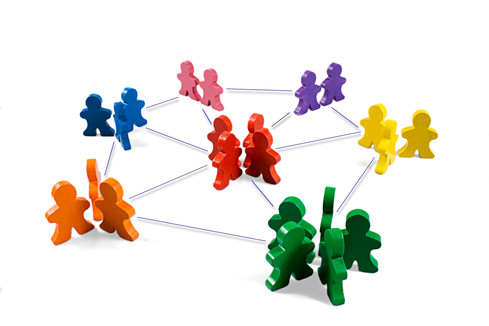
So we’re on the same page, I’m equating Development, Design, and Construction to a collaboration between The Hand, The Mind, and The Money, with the later starting the process and leading the charge by employing the other two to execute the project. They all have traditionally needed and respected each other as necessary players in a difficult process, and the balance of these relationships had remained essentially the same for centuries and across cultures. The Money respected its necessary employs; the Mind for vision and broad construction knowledge, and the Hand for specific construction knowledge, craftsmanship, and skill. The Mind and The Hand respected each other as essential partners in a mutual endeavor, learning from each other along the way, doing their best to fully understand each others‘ practices and anticipate needs so that they may better do their own part.

where would you rather be?

Where did it all go wrong?
As I said earlier, about a hundred years ago something very exciting and pivotal took root in the design industry, as with nearly every other aspects of life in the rapidly evolving new Modern Age; the traditions of a classic process of materials and methods were dissected and questioned. This new mindset (Modernism) challenged everything. The Mind (architects) explored the fundamentals of architecture as object, or collections of objects, paring away what was judged to be “unnecessary” in hopes of finding the essence of building, as a project, as an object, as an artistic pursuit of the highest order. Historical “styles” and construction practices were almost rejected in total, as either irrelevant anchors to the past or just aesthetically outdated representations of craftsmen’s skills, with no home in the modern era or the future beyond that. The future was industry, it was the machine, and it should be embraced in every aspect of life. Being thought leaders, The Mind jumped up to lead the redefinition. While The Money and The Hand initially resisted changes to conventions and traditions, once the financial benefits started to become evident that quiet resistance changed drastically. As they say, be careful what you wish for.

Another ongoing phenomena taking hold of the world; information and its accessibility. More people understood better than ever the mathematics (costs and benefits) associated with property development, on any scale. Real Estate became an investment strategy on par with banking or stock market trading. Plus, it steadily became an endeavor anybody could undertake. The relationship between the initial investment and the long-term returns on that investment became formally understood figures on a spreadsheet. The new concept of challenging everything (and everyone) was proving full of opportunity, finding few real opponents but many proponents. There were no rules, and therefore no experts, including anybody to judge the social value of projects being undertaken on unprecedented scales. The Hand and The Mind were unwittingly and gradually being downgraded from partner to employee, tools in an ever-expanding financial game.

From Paul Hohlmann's VanishingSTL blog. Note the building's neighbors as well.

The pace of life began accelerating unlike ever witnessed in the history of the human race. Lifestyles changed from agricultural/rural to industrial/urban, as society demanded production and the promises of the new fossil-fueled society were great and limitless. We collectively shed the shackles of centuries, and embraced our new modern lifestyles as self-proclaimed evidence of progress and providence, both inevitable and righteous. But all this industry and rapid growth had spoiled and congested the urban areas making them unpleasant at best and nearly unlivable at worst. A new modern paradigm for living was born, fueled by the availability of apparently endless acres and accelerated by fears of invasion; Suburbs. The explosion of roads and the availability of land made virtually everywhere available for development, and offered unfettered exploration of new approaches to living, working, and playing. The Mind originally championed this idea, ecstatic to explore Modernism with its new forms and relationships between the objects called affectionately “machines for living”. The Hand adapted, was happy with all the growth, and again became experts in the new materials and methods of construction. The Money enjoyed greatly the improved balance sheet, growing ever more profitable. The Public benefited from reduced costs, trusting The Mind and The Hand to maintain traditional quality, and valued The Money as the new leaders in the prosperous Modern age.


Which applied flavor is better? Is it enough to be new(er)? Was it ever good anyway?

As a mindset, Modernism was ripe for the picking as the “style” of choice by The Money, always seeking to minimize the investment and maximize the return. The Mind was happy to support the effort as they rode the wave of the avante garde, artists remaking a new and better society in their own minds. The Hand went adapted to the new ways that made for improved quality, increased speed, and reduced cost, again becoming experts. And frankly, The Public didn’t really understand what was being given up for this new shiny approach, but it was obviously better because it was new and it certainly wasn’t old, and the trustworthy Mind was at the helm after all. If an architect was involved, it had to be good or better than the alternative, right? It always had been before.

So, here it is, the degree-revoking statement; Modernism has helped destroy, or at least seriously injure, the built environment and the profession of architecture.

It’s not because Modern is an ugly “style” or is an invalid approach to addressing the architectural problems of the modern age. Rather it is because of how easily the idea itself was co-opted and how thoroughly we allowed it to water down every other traditional style as well. The Mind got lazy and arrogant, rejecting old for new. The Money took advantage, seeking higher profits. And The Hand adapted to it all. What started as an exploration to the question of the architecturally necessary and relevant, became the unintended answer to how little could be invested to achieve a goal that happens to involve a building. The Public got duped, betrayed in the deal, although I think the realization of what’s been lost is just dawning on us all.

In a progressively isolated intellectual exercise, The Mind failed to understand and explain the merits of both Modernism as well as the historic styles it rejected and professed to improve upon. The Modernist style was so driven by functions of materials and construction systems that the subtle relationship between the functional and the poetic was lost on most. The Mind betrayed a trust earned over centuries, eventually satisfying ourselves with superficially applied “Modernism” on an investment shell.

pale shadows of memories lost

The Hand, out of necessity, became an expert in the new efficiency-driven paradigm, forever the necessary means to physical completion.

The Money grew to see The Mind and The Hand as merely a necessary part of an investment process designed to see short-term gains with no responsibility for the larger societal implications.
Consequently, The Hand and The Money capitalized on this ambiguity and partnered directly with one another (Design-Build), utilizing The Mind more as a necessary means to an end rather than a valued partner.

We (architects, aka The Mind), in part did this to ourselves.
• Too quickly did we abandon soul-imbued craftsmanship for sterile simplicity and efficiency, hailing the modern virtues of minimalism and the machine while also denouncing the ornament of craft and tradition.
• Too complicitly did we allow and validate an important and timely exploration to be bastardized.
• Too ignorantly did we fail to understand the full implications of our questions and actions.
• Too neglectfully did we fail to educate ourselves and John and Mary Public on what was being gained AND what was being lost.

Know that this has been a grossly simplified statement of opinion, intended to spark a valuable conversation about past, present and future. I understand that there are many forces at play here and that bad buildings and purely functional buildings have always been around, typically far outnumbering their higher quality relatives. I also understand that the wealthy and powerful have and continue to produce some great Modern Architecture over the last century. I simply argue that Modernist ideologies converged with other forces of our time to result in a proliferation of soulless buildings and spaces, going as far as even destroying great buildings in order to glorify ourselves. And I argue that we were complicit in proliferating the mediocrity, helping to impose upon our built environment a social burden that we are now saddled with correcting, while at the same time lacking the respect necessary to do so.
The good news is that in the last ten to twenty years, I have seen us begin to remake ourselves. Our role and our tools are changing, maybe back to a familiar version or maybe into something totally new. The conversation has begun, but this time let’s consider with respect and appreciation what come before and build upon it. Let us again earn the trust of our partners The Hand, The Money, and in particular The Public.

FEES; WHAT YOU GET FOR YOUR MONEY (YOU GET WHAT YOU PAY FOR)

Derek Maschek
MASCHEK design and fabrication
www.maschekdf.com

This has come up a lot recently, and frankly, comes up all the time. However, it’s the topic we (architects) least like to talk about but most NEED to get comfortable with. Architecture is a professional service, and it’s a business. What Architects (and Interior Designers, Landscape Architects, Planners, etc.) charge for is their time, with values for that time being directly related to resources, experience, skill, and talent. In school, many are never taught the money side of architecture and even when it is, there is no experiential reference so “in one ear and out the other”. It’s when our first potential client comes along and asks, “Hey, how much to design my house?” that we sit back and start to panic in a fog of ignorance. The answer we give; “well, it depends”. Coincidentally, this is exactly right, but without more information it doesn’t seem to help the conversation much.

Before I proceed, let me say that there are bad architects out there just like there are bad doctors, bad lawyers, and bad everything. And just like there are bad service providers, there are bad clients too. Unknowingly or knowingly, it is possible for either party involved to be less than ideal partners in a services arrangement. So, keep in mind that everything I say below assumes qualified, forthright, and honest partners are involved.

Another caveat; this is just about Architectural Services. There are no engineering fees or other design fees included with any numbers I give. Those can just as easy to be collectively equal to or considerably less than the architectural fees, it just depends.

Lastly, architects (I won’t speak for other design professionals) have several basic approaches to calculating fees, several approaches to charging for services, and lots of customizations they offer depending on project specifics or client needs. To be comprehensive about all this would be a college course in itself.
___

Historically, architects look at the project from three basic perspectives to determine a fee; hours of work, percentage of construction, and cost per square foot. These are estimated and referenced against each other, compared to other similar past projects, and tweaked until the three seem to jive with one another.

When we look at the project from an hour’s perspective, we literally consider every part of a project including administration, communication, and documentation. Tally it all up and multiply it by what we call a “blended” rate (an average of the billing rates of all those working on the project), and you have a fee estimate. Specific hourly rates can be used if known, such as with repeat or cut-and-dry projects. The more technically involved the project (hospital, laboratory, etc.), the higher the blended rate and thus higher the total fee. The opposite is true as well.

Looking at the fee from a percentage of cost of construction perspective is really useful for repeat projects or with very familiar project types. In commercial construction, architectural fees can range from less than 3% on large or simple projects, to over 15% for very custom residential, highly technical commercial, or projects with heavy hourly involvement. For a commercial project, I’d assume at least 6% of construction cost would go for architectural fees. For custom residential, 10% is more appropriate.

Using a cost per square foot methodology again should be used only for repeat projects or with very familiar project types. Given the variability of project requirements, it’s hard to even provide suggested guidelines, but consider $2.50/sf a starting point for common Tenant Interiors (office and retail that involves essentially interior walls and no exterior/shell work). While it can go down from there on really simple projects, this base number will go up quickly with architectural/exterior work, so only use this as a rough guideline. It behooves any architect to keep track of projects, their fees, and some of the usual parameters (such as square footage) for reference later as a check against future estimates using this methodology.
___

We’ve discussed how we estimate our fees, but it may or may not be how we charge for our services. Contracts are typically drawn up as Hourly, Fixed Fee, or Percentage of Construction. However, final contracts for all available design services are typically a blending of these approaches. How an architect handles fees for Design could easily be different from those for Specification and Documentation.

Hourly is just what is sounds like; billing for every hour spent on the project just like a lawyer would do, charged at whatever rate suits the employee involved. Rates vary from about $50/hr for administrative or inexperienced staff, up to about $250/hour for principals, specialists, or big names. From an architect’s point of view, this method is most appropriate for a time-consuming client (committee clients, indecisiveness or impulsiveness, unavailability, etc.), or where a project is undefined (site unselected, unique construction systems, nebulous program, etc.). It’s advantageous for the client to use this when the project is really clear and simple, client decisions will be quick and conclusive, and client experience suggests the architect’s total time estimates are high. Often, what is best for both client and architect, is to use Hourly for early phases (Site
Selection, Programming, Planning, Schematic Design) as well as later phases (Bidding and Negotiations, Construction Administration) such that an appropriate amount of a professional’s time gets placed where needed but time can be limited where a client wants to assume risk or provide assistance. Even if not asked for, an architect should always provide an estimate of the total hours involved in order to prepare a client for the anticipated end cost, or else expect an angry client later.

Fixed Fee services are derived using the methods I mentioned above, and are a “fixed” number to be paid for the services provided. As always, it is critical that a professional be absolutely clear about what services are being provided for said “fixed” fee. It is likewise critical that a client understand what services are and are not being provided. Talk this all through in person. It is time well spend for all parties involved. Nobody likes getting additional bills above what was agreed upon so both parties need to be clear in the contract and over the course of the project if and when Additional Services are probably going to be, will be, are being, and then have been incurred. As with a construction bid, the low-bidder may is likely saving money by limiting services rather than “doing it for less”, resulting in a client not getting what they expected or needed, but while getting what was contractually agreed to.

Percentage of Construction is a good and fair approach as there is some association between the value of the result relative to the fee incurred. Now, I have heard complaint by a client that asked “why should the design fee go up so much just because gold shingles were chosen over asphalt shingles?”. In this example specifically, the gold roofing would require a higher level of detailing because of its value, longevity, and uniqueness. But generally speaking, there is a greater liability risk should something go wrong, so costs associated with insurance adds in here too. Also of note here, as the initial fee estimate is based on projected rather than actual construction cost, there is the distinct possibility that the final fee will end up higher after all the receipts are added up. Actual construction cost could be less too, reducing the fee, although this situation is rare at best. Finally, it is imperative that the architectural contract define what the construction cost includes, and the contract between the contractor/builder and the client needs to coordinate with this definition. In this situation, the architect should have rights to reviewing the contractor/builder’s “books” in order to avoid relevant expenditures being kept “off the books”. If this method is pursued, only the most professional and thorough contracts (re; American Institute of Architects) should be utilized in order to properly protect all parties involved.
___

This is just a quick overview of the subject of fees associated with architectural design services. There are numerous phases in every project, there are a number ways to handle each phase contractually, and there are innumerable project specifics that will impact the final number. I understand that the numbers I’ve outlined here often come as a shock to people that are new to the Architect-Client relationship. Note that this is all just a beginning, a conversation-starter designed to get you (Mr. Client) prepared just enough to have an informed and productive conversation. Just remember that our fees are about our time. Necessary aspects of technology, infrastructure, overhead, and profit are all calculated into our hourly rates and are generally not negotiable. If you want to save money, it’s about saving time. However, know that saving money by reducing an architect’s scope will definitely result in at least one of three things; increased client’s (and even architect’s) risk, reduced quality, or just shifting the expense by paying somebody else to do the necessary work.

For most people, an architect will be employed only once and the investment involved is usually substantial. As a client, do your homework and look at your potential architect’s previous work and ask for some references. Know that often there is still more to the story, so talk with your prospective architect about it all; the good, bad, and ugly. Good planning (which is what architectural services are all about) is critical to a good project and considering the cost of construction relative to design services, worth every additional percentage point. There will always be those that offer up the “same” services for less, but ask yourself and your potential architect(s), “why are you less, more, or different?”. To just pick the low bidder is a recipe for disaster, one that likely will cost you considerably more in construction than you saved in design.

I liken architecture to planning for and executing a battle plan. It’s never a good idea to just charge down hill into enemy territory, nor is it a good idea to spend too much time anticipating every possible contingency. Get a good team, find the balance of wants versus needs, plan well, communicate well, and then execute. While nothing ever goes exactly as planned, in-field adjustments and additional expenses will be minimized, and the overall experience and final project will be something you are happy with and proud of, eager to go out and do it all again.

through the eyes of a young architect by nicholas kreitler

With every profession applying the term architect to a title, what does it really mean to be an architect? It seems funny to me that for the past few months, several publications have revealed architecture has the highest unemployment rate as a degree. So I started asking questions, why would somebody want to be an architect during these times? Is the title of architect becoming just another buzz word or are we more than the latest profession in the spotlight? It took a minute to ponder, so I rubbed my eyes in an attempt to wake up and thought if I would rather be anywhere else. I knew the answer to that question before I even finished that thought; there is no other profession out there for me. Maybe I am strange but I love the long hours, sleepless nights, and more cups of coffee than any one person should drink in a lifetime.

Architect used to mean “master builder”, but what does it stand for today? Are we still considered a master builder or just simply a luxury item, when aesthetics are concerned? Now I will admit that we don’t know everything about something, but we do know something about everything. The goal of an architect should be to create sexy solutions for everyday issues, through the collaboration and knowledge of various disciplines. The critical part of our job it to be able to cast a vision on the end result of the project and develop a plan for getting there.

The key in the success of any project is communication. Our ability to bridge the gap between professions and find a solution that works for everyone is critical. An architect understands the rules of thumb and generalities of each discipline, but doesn’t have a full technical knowledge of everything. This is why collaboration is critical, and why bringing everyone to the conversation is so beneficial. We must be a leader, but in order to be a great leader we must surround ourselves with individuals that possess the strengths we do not.

A view down a side street in Boston, that features walk up housing.

Not only is the architect the leader of the design team, but they also help to lead change. With gas continuing to rise in price, I believe we will start to see the decline of suburbia. My hope would be to watch density rise and a rebirth of our cities. The days of spending hours in our cars is coming to an end. As an architect we have the ability to re-imagine our urban spaces and create places that enrich our daily lives. We must remember that design doesn’t have to be force fed to the public, but can be done in a subtle way that compliments the existing situation, whatever the conditions may be. The greenest buildings are the ones already standing, but we must find ways which facilitate the functions those buildings never anticipated.

I could not be more excited for the challenges we will face ahead. They  will not be easy, but they will begin to challenge the way we think. From the places we choose to dwell, the way we look at our cities, to the way we design our landscapes; these will be changing. It is up to us to decide if they will change for the better.

Part 1: “Designing Small is Designing Smart” by Derek Maschek

Welcome to the most important part of the design process and woe to those that try and cut this corner altogether, or fail to go through it properly. Believe me, there are those that try, and all regret it without exception. So pay attention and listen up! Ready? Here it is…

Programming.

Sounds technical, and by all appearances it is. So what could it possibly have to do with design and how could it possibly be so important to design? Well, you probably remember the term GIGO from high school or maybe even grade school; Garbage In, Garbage Out. A piece of software, a website, a digital application of any sort, only works as well as its programming. So, in a similar fashion, if you aren’t designing with the right information, you are doomed from the start.

Especially when it comes to designing small, programming is about asking the right questions and answering them honestly and thoroughly. It includes questions to which you think the answers are obvious, but beware, this is where assumptions and misperceptions live and they have the potential to undermine everything. It’s not all about avoiding disaster though – programming is the best part, the most exciting part. Programming is where creativity is born and takes root, where opportunity hides, and where magic waits to transform your project.


A quick moment has to be taken here to shamelessly plug the profession of which I proudly belong – architecture. But this is exactly where design professionals show their experience and talent, and value. Working with a professional saves time and improves the quality and potential of the end product. Save a dollar here and spend hundreds later as a little good planning goes a long way. I’d say “trust me”, but we’ve all experienced rushing into something that we didn’t give due attention beforehand, and we paid the price. As most people will likely only engage a design professional once in their lives, if that, it’s important to not learn this lesson after suffering the consequences.

Now, it’s so tempting to jump straight into the fun stuff, but as with any building you have to build a good foundation first. We start with the three biggies; budget, schedule, and quality. To the best of your ability, be specific and prioritize so that a decision-making framework is established and clear. Some insight on how this works; the more you expect from one, the more the others have to give or else things get hairy really quickly. For example, if you want a lot of house for a little money, plan on lower quality and an expanding schedule. If you have a tight schedule too, then quality will plummet. Say you want high quality but don’t have much time, be prepared to pay dearly for it. The advantage to designing small is that the pressure on all of these items is eased from the start. All things being equal, the less you build, the quicker you can build it and the less it will cost. It’s a win-win-win situation, so congrats on picking the smart path! You can indeed have it all…sort of….

Next we start talking specifics; functions, features, and relationships. Prioritize them again so that everybody understands their relative importance and why. List the functions of your house and sketch them at their most essential. Often these functions are “rooms” but to call them rooms already would be one of those assumptions to be wary of. Be honest with yourself and distinguish between a want and a need. Size spaces to their function and furnish only to accomplish the task (“form follows function”). Watch out for duplicate functions and look for opportunities to overlaps too. Every bit as important, identify what you do NOT want or need, and why.

Discovering the difference between a Want and a Need comes out when answering the question “why”. Be honest and note, if you WANT something bad enough that it is non-negotiable, it does indeed qualify as a NEED. Squeezing out a bunch of low priority Wants is the best way to reduce the area of your house. As you start thinking about the number of “bedrooms” you list, ask some questions. Why three (to pick a common number)? Do you have two kids?, or just one and the other is really just a guest room?, or is there just an assumption that three bedrooms is what the market will want come time to sell? Could two of the “bedrooms” be combined even, as long as there’s some ability to achieve privacy, or could one be storage now and finished later if needed? Of course these questions are numerous and most of the time an answer leads to another question, exactly like a really good in-depth interview.

Sizing spaces for functions is about furniture quantity, size, and placement. In non Master Bedroom sleeping areas for example, are full size beds necessary or can they be twins?, or how about bunkbeds? Can they be pushed into a corner?, built into an alcove?, or even be hideaway like a Murphy Bed? An opportunity in small houses we’ll discuss later in this series is, you can actually buy less but higher quality furniture, and smaller spaces beg for smaller and simpler furniture.

Next, watch out for duplicate functions, as with separate Family and Living “Rooms”, or Breakfast Alcoves, Kitchens with seating, and Dining “Rooms”. Seek instead to overlap or combine spaces with related functions, like only sitting to eat in one centrally located farm-style kitchen area. Last but certainly not least, since circulation constitutes about 75% or more of the actual square footage of a house, consider how to put more functions within reach of the same paths, like with laundry and office functions “in” corridors. A function that’s directly accessible from another space uses much less space than a “walk-in” room dedicated to the function.

Design is fluid process. It’s not always obvious, is rarely quick, and is never all fun and glory as reality shows would have you believe. But it is those nuts and bolts components that make the overall process an enjoyable one, and the result seem so perfect. Others will ask “how could it have ever been anything else?” and you will know the simple truth- it all started with asking the right questions.

Stay tuned for more installments on this topic in the coming weeks.  Derek can be reached via email to discuss a specific project.

careerspeak: how to sell YOU! by Kimberly Reuther

I know we keep discussing the bad economy but in reality, it is a shifted economy that we now live in.  As with the weather patterns, the rules of business have changed and will change again in the future.  The one thing that remains constant is the need to “sell” yourself to potential employers, clients, and business associates.

My philosophy on self-promotion and marketing is somewhat different than most.  I don’t believe in shameless self-promotion, I abhor it actually.  I believe in being informative and helping people.  Here are a few things I picked up in my career that I hope will resonate with you as you enter your next working relationship.

1.  know your audience – I believe this is an essential technique for success.  Put yourself in the other person’s shoes.  Ask questions, pay attention to subtle clues and adjust your message accordingly.

For business dealings, make sure you aren’t pitching an expensive remodel to someone who is looking for DIY advice.  For a job interview, it is important to learn more about the company than they know about you.  It is as much an interview of them as it is of you.  

2.  know your strengths –  There comes a time in your career where you are comfortable with what you don’t know and are confident with what you do know.  Don’t be afraid to call in someone else when you are in over your head.

Your clients and boss will respect you that much more when you complete the project on time with the help of someone else versus costly mistakes to your client or employer. 

3.  keep it real, keep it personal – People do business with people they like.  Simple.  Be friendly and personal in all of your professional dealings.  Don’t be afraid to let your sense of humor and little quirks slip into the conversation.  Work doesn’t need to be so formal & serious all of the time, we’re not brain surgeons!

You are a unique individual and promoting what makes you special will get you far in life.

4.  expand your network – A common phrase is “it’s all about who you know.”  Fortunately, it is true, especially, in a smaller city like St. Louis.  This city is full of amazing people and they often aren’t found in your generic networking seminars.  Don’t underestimate the importance of getting outside your “circle” to meet new people.

Listen to those around you; get involved in larger organizations and causes greater than your own.

5.  admit when you are wrong – I think this is essential to being successful in business as well as in life.  We don’t always make the right choices, even with the best intentions.  It’s okay.  Own your successes and failures and learn from them.  Doing so will make you a better business partner, team member or employee.

Every thing that has happened to you has gotten you to this moment and shaped you into who you are.

From White Box to WOW by Kimberly Reuther

Most of us love, or at least appreciate, architectural moldings and finishing touches in our homes.  However, not everyone’s home is “born” with these elements.  I am often asked how to decorate a room that looks like a white box.  Bare walls, no moulding, basically a square.  While seemingly uninspired to some, for designers this is a wonderful challenge.  We get to create!

Here are my ideas to help differentiate your space from every other “white box” on your block!

– First, you could experiment with adding simple elements such as a picture ledge.

These can be installed at various heights depending on it’s desired function.  In this instance, we did the shelf along one wall above the headboard and the pictures and objects are within reach to change out regularly.

In the second photo, the ledge was installed higher up on all 4 walls as a purely decorative element.  This is great in a contemporary home that doesn’t have crown moulding.  Make sure you allow enough space for a mirror or TV to hang on the wall.

– Another idea is to add really special elements that don’t make you miss the architectural details.  These uniquely beautiful pendants make a statement all on their own.

– Just because you don’t live in a loft doesn’t mean you can’t achieve the look.  This home is in the middle of a brand new development outside of San Jose.  No lofts for thousands of miles.  The brick wall adds a much needed urban element to the space.

– A basement is really an extension of your home and offers much needed entertaining space.  Boring white walls and extra high window sills left this vast lower level feeling lifeless even after the furnishings arrived.  My solution was to add beadboard paneling up to the windows on 2 major walls.  We painted it a rich caramel color which tied into the color scheme and immediately warmed the whole room.  Topped off with a picture ledge full of personal accessories and this room has been transformed into an inviting family space.

– Another area to consider is the coffered ceiling.  More often than not, the builder stops with just the soffits that step up.  Adding in crown moulding and even painting an accent color will make such a finished statement to the room.

Some of these projects you could tackle in a weekend, others require a professional.  With the right amount of imagination, you too can be proud of your home’s unique appeal!

Previously written by Kimberly for St. Louis AT HOME’s website.  Read more of Kimberly’s work and view her portfolio at www.kimberlyreuther.com.

meet our panelist: tom niemeier

Tom Niemeier has worked on basically all the sides of the table in the design and construction process, from that of architect, to client, to contractor.  During that time, he has evolved a three pronged approach to marketing and branding.

First; it starts from within.  The design Team must understand, believe in, and practice the core philosophy of the company.  Hire correctly. Let your team contribute throughout and see the project all the way through. Do quality work and let it speak for itself.

Second; relationships.  Stay in touch with your clients after working so hard to create something special with them.  Do this casually, and keep it fun and down to earth.

Third; name recognition.  ”Hit ’em from all sides.”  Do good work and promote it.  Win awards and announce it. Get to know the print media and get published. And social media is particularly special as “architects have the ability to do really interesting tweets”.  But no matter what, keep it casual, real, and approachable.  And hopefully when the time comes and somebody is looking for an architect, your name is the one that comes to mind first.

Click the link below to get a glimpse of the SPACE experience.

Note:  Tom was recently featured in St. Louis Magazine.  Click here for the article.

Leaderspeak is an event for industry professionals on 11.9.11 and will be held at Global Total Office.  Click here to view the invite.

Intro to “Designing Small is Designing Smart” by Derek Maschek

Smarter and Smaller Houses, an Introduction to Design

Last year, Merriam-Webster voted “austerity” the apparently coveted status of Word of the Year.  The negativity around the term can be seen in the riots of Greece and Spain and Great Britain.  The word “austere” includes definitions such as “stern and cold in appearance”, “markedly simple or unadorned”, and “giving little or no scope for pleasure”.  No word better captures how many people would react if I were to suggest the concept of building small, particularly at a time when more is perceived as better.  And no word could be more misleading and wrong to the great potential of this “other” design approach.  So, to establish a new frame of reference, let me throw some new words into the pot for consideration;

Efficient

Effective

Essential

Economical

Connected

Comfortable

Convenient

In only sixty years, we have witnessed an interesting phenomenon in the United States.  The average size of a family has seen a 30% decrease, from 3.6 to 2.7 or one person.  Over the same period, the average house increased by 140%, from 1,000 to 2,400 square feet.  I’ll let you make any connections between life then versus now, as that is another conversation altogether and getting preachy here detracts and distracts from the power of a very powerful design methodology.


Put simply, when built using the same conventional methods, small houses cost less to build, operate, and maintain.  It seems obvious, but building less means a directly proportional reduction in the materials and time required to build, and in many cases the actual per-piece costs for materials is reduced as well.  Operationally, costs are reduced by limiting the resources needed to make the house work and be comfortable to live in.  And from a maintenance perspective, less time and money is put into cleaning, repairing, and eventually replacing all the components that go into a house. When capitalizing on the full capabilities of new technologies and the better understanding of traditional ones, these savings are compounded.  And by corollary, for the same cost, if you reduce the square footage, you can increase the cost per square foot, meaning a smaller house provides an opportunity for higher quality or more features.

This is a topic that has been covered by smarter people than I, and in greater detail than I’ll get into.  I intend only to provide an overview, emphasize a few simple points, and show some commonly pursued tactics as well as some uniquely innovative ones.  Most importantly I hope to reveal the underlying philosophy that supports it all, to shed light on the “other” design approach I mentioned at the top.

Architecture specifically is commonly perceived as an answer to some problem, a solution, a thing.  The emphasis is on the result.  However, architecture specifically and design in general, has been more accurately defined as “problem solving” or “problem seeking”. Design as process, not product.  In order to solve a “problem”, it is critical to first understand it, to ask questions in order to discover its essence in as much detail as possible.  So, when it comes to designing a small house, let’s focus on the questions being asked as a means to understand the answers that result;

What do you want in a home?

What do you need in a home?

What limitations are there?

What opportunities are there?

I would invite you to go through a sort of design process with me moving forward, answering these questions as best you can.  Consider the design of your dream home, your vacation home, or just reimagine your current home.  Consider the addition or renovation you’ve been contemplating.

Designing a small home, as it should be with any home or any building, is really nothing more than being smart about it, balancing what you need with what you want with what you have.  Designing small, is designing smart.

Stay tuned for more installments on this topic in the coming weeks.  Derek can be reached via email to discuss a specific project.

guest blog: green renovation by Diane Rosen

Thrilled at the prospect of creating a room, really creating a retreat from an existing garage was all at once exciting and challenging at the same time.

Let me take you on this adventure……….

The Vision:

Collaborating with my clients, their thoughts, needs and wishes….”I’ve always wanted, thought about…”

Ahha…a lake retreat with emphasis on relaxing and comfort was born…

The Challenges:

The existing garage had no plumbing or HVAC.  In collaboration with top contractor Mike Lemke of Renovation Specialists, plans were drawn, discussed and decisions made.

A bath with shower, sleeping and lounging areas were all components of this retreat, a great get away, so close yet so far away.

Using only no VOC (toxic free) paint by Sherwin Williams, local lumber, recycled fabrics, treasured family antiques and adding lots of comfortable surroundings (gotta have a TV, fridge and microwave) put smiles on my clients faces and definitely one on mine and contractor Mike Lamke.

View more of Diane’s work at www.dianeroseninteriors.com

Related Posts Plugin for WordPress, Blogger...