Like a Well-Aged Wine…Vintage Furnishings are Being Uncorked by Kimberly Reuther
We’re finally catching on…albeit slowly

For centuries, our contemporaries around the world have been perfectly content living in vintage buildings and homes.  With peeling plaster walls, dramatic moldings and herringbone wood floors, these interiors are reminiscent of previous decades and remain intact for new generations to appreciate and enjoy.  Americans, however, have long favored the “new” versus keeping or reinventing the “old”…It was, after all, how we were discovered and founded that instilled this behavior in our culture.  Maybe the term “New World” was on too many advertisements back in the 1700′s!

Not all bad, remember, it was our determination to mass produce things more efficiently that allowed Henry Ford to popularize the assembly line for the model T.  To this day, food, clothing, electronics, furnishings, to name a few, are still produced in a similar fashion.

In recent years, Americans are starting to realize the impact of our global “footprint” on the rest of the world.  Combine that awareness with a crippled economy and we are witnessing a “light bulb” moment in American homeowners with more diligent spending and a furniture perspective in which “vintage” just became “new.”

Here are a few tips for incorporating this design aesthetic into your home:

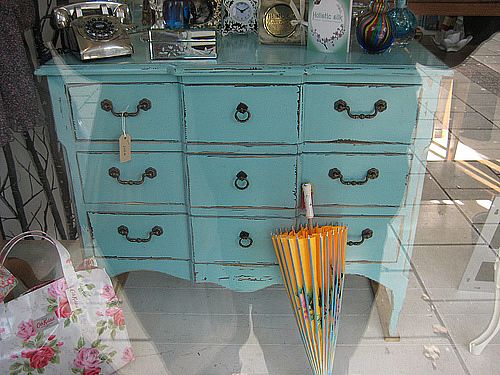
1.  Reuse what you have  – Fashion a slipcover on an aging sofa, give an old dresser a fresh coat of paint or turn a few unworn clothing pieces into pillows.  Collect unused furniture from relatives and friends to reuse in your home.  Display a collection of mis-matched plates as art.  Recycle old work equipment into colorful cocktail tables.  Vintage looks don’t have to be drab or stuffy; add punches of color to offset the aged pieces.

2.  Expect things to age gracefully – Marble, wood, cotton, limestone, bamboo, granite, wool are all natural materials and will not look the same in 15 or 30 years as they did when they were purchased  That doesn’t mean they need to be thrown away or replaced.  Think of the “scars” on your kitchen island as war wounds that should be proudly displayed to neighbors.  Keep in mind, these materials have been used for centuries and will last as long as you will.

3.  Purchase furniture as an investment – The value of antique furniture is endurance.  Does IKEA have endurance?  Seek out quality and you won’t have to re-purchase all your furniture every 4 years.  This is especially true for upholstery and casegoods.  Upholstered pieces can be recovered, restuffed and reborn.  Wood pieces can be refinished numerous times.  Do your homework and take care of your furniture to enjoy for decades.

4.   Add architectural elements, better yet, buy an antique…house.  St. Louis is fortunate to have a lot of beautiful homes with stunning architectural features inside and out.  Why try to reinvent the wheel by building a brand new home?  The amount of charm and character in an older home can far outweigh the costs of renovations if you choose wisely.  If you are looking to add details to an existing home, crown moulding and door casings are the first place to start.

5.  Last but not least, uncork a bottle & toast to your accomplishments!

Previously written by Kimberly for St. Louis AT HOME’s website.  Read more of Kimberly’s work and view her portfolio at www.kimberlyreuther.com.


Can My Life Be Simplified? by Jamie Briesemeister

5 Considerations When Deciding on Home Automation.

1. “Home automation” is not as threatening as it sounds…

The term “home automation” may conjure images of The Jetson’s or Bugs Bunny’s “Home of the Future” where hologram telephones are possible and meals are as simple as zapping a small pill. Poof, instant turkey. While many of these futuristic experiences actually do happen today, the solutions are more realistic than instant pill-food. Automated lighting, a secure house at the push of a button, touch screens that control the whole house. It’s possible right now and it’s not as scary as you may think. Believe it or not, you are already proficient with the concept of “home automation”. Consider this the next time you drive your car, complete with: antilock-breaks, automatic transmission, cruise control, folding side-lights, etc. Move this same concept out of your car, into your home, and start dreaming.

2. Identify your frustrations first.

Electronic systems can be a joy to operate or they can be a royal pain. Consider all of the knobs, handles and switches that you already control throughout the day. There’s a good chance they can be streamlined into one system, saving a lot of multiple steps in your life. Start where you are frustrated: lights ALWAYS on, the pile of remotes, sense of security, or lack thereof. This prepares you to spell out your goals so the companies you call have a general scope of work and can create a preliminary plan to help you meet your objectives.

3. Look at your options and choose a qualified contractor.

Unless you have a design everyone will bid against, your stack of proposals may be complete apples and oranges. Providing a good list of goals (above) and a budget (below) will help, but if your project is large or intricate, you may want to consider hiring someone to design the system first and then embark on search for the right company. Look for CEDIA certification (www.cedia.org), review references, and check the Better Business Bureau (www.bbb.org). Websites and social media sites (such as Facebook or Twitter) are great windows into one’s style of business or services offered. You may even find project galleries, technical tidbits, or other insights that make you lean toward one company or another. Go with whom you feel the project is right and if things change, consider calling the other guys.

4. There must be value in the solution for it to benefit your life.

If something is bugging you about the way you interact with the electronics in your home, what is it worth to you to fix it? If it is worth $5/day to eliminate the nightly light shut-down-route for five years, that’s $9,125, a realistic starting point for lighting control in the most-often used rooms of your house. For new builds, it’s not unheard of to spend 10-15% of the home’s value on a home’s electronic systems. Divide it out to the per-day cost and ask yourself if it’s worth it to you. Use these numbers as your budget, and consider sharing this information with the companies you call. The one with the best solution, given the budget, might be up for hire.

5. Prioritize, but do not forget about planning for the future.

For various reasons, experiences you may ultimately want for your home may not be available currently. Perhaps it’s the budget, the project timeline, the special order, the technology, who knows. Consider your solution like an a la carte menu and pick what’s important for you now. Create a growth plan with your contractor to identify certain future needs: cameras in the nursery, media room in the basement, etc. This way, you get to enjoy what matters most currently ñ while planning for the future so that your system will be enjoyed for years to come.


Healthy Abode: Spa Bath – Part 1 by Melanie Holden
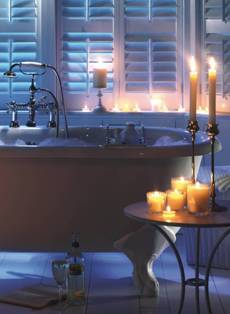
Are you too busy for a regular spa trip, but in desperate need of a little pampering? Join the club! It seems like we’ve all been required to do more with less over the past few years, which makes for much busier, more stressful lifestyles. Needless to say, all this work and worry is not good for your health or frame of mind. Excessive exposure to stress can lead to or exacerbate serious health problems like sleeping disorders, heart disease, depression, obesity, and high blood pressure just to name a few. It is time to take relaxation into our own hands! Many overworked, underpaid, stressed-out people are turning to the bathroom as a soothing sanctuary for rejuvenation and retreat to supplement or even replace those few spa trips they have the time and money for.


But wait, your bathroom just doesn’t exude the stress-free spa oasis atmosphere you’re dreaming of? Well, I have some thoughts to help you transform it in a way that will entice each and every sense. It turns out that I have a lot of thoughts on this subject, because once I started putting those thoughts on paper, I couldn’t stop! There are so many ways to “spa your bathroom” that to do this subject justice, I decided to break this one up into a blog series.

So, part one, here we go! The spectacular thing about spa’ing your bathroom is that you can go all out or just add a few personal touches to what you already have. If you’re not in the market for a gut rehab of your entire bathroom, you can do plenty of little things to create a calming spa-like ambience. Ultimately, trust your senses and choose soothing colors, textures, sounds, scents, and soaps to nurture your body and soul.

But first, you must de-clutter! Clutter creates a sense of unease and chaos, making true relaxation virtually unachievable. Get organized and get rid of anything that you don’t love or is not functional. Make sure that everything has a place and that things are stored neat and organized.


Once your de-cluttering mission is complete, its time for the fun part: finishes! Whether working with an existing bathroom or starting from scratch, think natural. Natural colors, textures, and materials add a fresh, organic feel to any space. Incorporate natural stone, actual stones, or recycled glass for an organic, earthy feel in your bathroom.

Deep, rich wood tones and bamboo elements add warmth and elegance to a room. Wood elements will also promote personal growth, inspiration, creativity, and passion.

Incorporating a few metal elements into your bathroom will create harmony and can balance a space. Various types of metals are even associated with good health. Just don’t overdo it; too much metal can cause anxiety. Keep in mind that the goals are harmony and balance. Are you starting to feel a little Zen yet? Many of these spa strategies align effortlessly with Feng Shui principals; hmmm, sounds like a great subject for a future blog, don’t you think!

Plants are another way to enhance your bathroom atmosphere.

Not only a natural accent, live plants clean the air and bring the outdoors inside, adding color and texture. Tropical plants thrive from the bathroom humidity and herbs provide naturally fresh scents. Your bathroom should emanate fresh, clean air, not a chemical jumble of artificial fragrances, air fresheners and cleaning products. Display small pots of lavender, rosemary, sage, or peppermint. Potted fresh herbs will not only enhance your bathroom atmosphere, they can be used for your very own custom aromatherapy bath! Pick a few stems from your favorite herb du jour, wrap them in cheesecloth and tie them to the tub faucet so the water flows through them as the tub is filled.

Check back soon for part 2 of Spa Your Bathroom where I’ll elaborate on the colors you may want to consider for your spa bathroom, what effects particular colors can have on your mood and what chromatherapy is all about. Until then, happy bathing!


The Healthy Abode: FSC – What is That? by Melanie Holden

In several of my previous blogs I’ve referred to FSC Certified wood products, which has generated the question on more than one occasion: what exactly does FSC Certified mean?

log

FSC is an acronym for “Forest Stewardship Council,” which was established in 1993 by various representatives from social, environmental, and forest management groups to raise awareness of and transform destructive logging practices. The FSC is a third party certification organization that assesses those who manage the care of forests. The Forest Stewardship Council realizes the fragility of the earth’s natural habitat and strives to protect it while preventing deforestation. Based in Germany, the Forest Stewardship Council exemplifies the world’s strongest system for setting forest management standards ranging from legal issues, regional circumstances, and environmental impacts of forest management. Their mission is to promote environmentally appropriate, socially beneficial and economically viable forest management. A simple way to recognize sustainably harvested FSC certified wood or bamboo is to look for the FSC label on the packaging or the material itself.

fsc logo

By following FSC requirements, forest managers adhere to a sustainable plan that imitates the natural life and death cycle of the forest. FSC codes prevent harvesting more trees than what grows back, and do not allow the harvest of rare ancient trees. FSC also mandates forest practices that reduce chemical use and protect the natural habitat. The use of genetically modified trees and organisms (GMO) is prohibited, and FSC assesses and strictly monitors nearby springs and streams to detect any signs of contamination or vegetative disturbance caused by harvesting. When forest managers make the decision to strive for FSC Certification, they must comply with all applicable FSC rules and practices and cannot use the FSC label without first earning certification. After becoming certified, they must continually prove compliance with FSC standards through annual audits.

plywood

An added measure to ensure integrity of FSC certified products is Chain-of-Custody certification (CoC). FSC certified wood is tracked and documented through the production process from forest to finished product. CoC certification requires the FSC certified products are kept separate from other products throughout the production process. Only operations with the FSC CoC certification are allowed to label products with the FSC trademarks.

Practically anything that is manufactured from trees can be FSC Certified. Not just limited to building materials and finishes; paper, pencils, cutting boards, even musical instruments can be made from FSC certified wood! It is important to note that FSC Certification does not have anything to do with the materials being recycled or reclaimed ñ only that they were derived from trees from a well managed forest.

pencils

Until recently, Bamboo products were not eligible for FSC Certification, but thankfully, they are now! Though it is a popular renewable resource because it regenerates approximately every 7 years, the harvesting practices of some bamboo growers are less than sustainable. Some bamboo is harvested too early, and some countries are actually deforesting their native trees to make way for bamboo forests! Bamboo absolutely needed to be regulated.

bamboo forest

FSC is not the only certification program and should NOT be confused with the paper-industry backed Sustainable Forestry Initiative (SFI). The American Forest & Paper Association basically created SFI to promote “business-as-usual” logging practices as being sustainable. It is the epitome of greenwashing and is funded by large paper companies for their own best interests. The photo below shows an example of an SFI compliant forest in the Sierra Nevada’s in California.

logging

And this photo is from an SFI Certified forest in Maine.

logging

Tell me, what is wrong with these images!

In comparison, the following is a photo of an FSC Certified forest, also in the Sierra Nevada’s shortly after a harvest.

after harvest

The FSC is by far the most credible and scientifically sound standard for sustainable forest practices. Today nearly 125 million acres of forest are FSC certified in 76 countries. For more information, go to the Forest Stewardship Council’s website: http://www.fscus.org/about_us/

DIY – Chevron Pattern Dresser – Kimberly Reuther
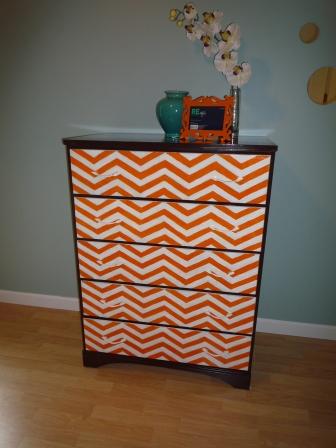
Those who know me best are well aware of my ability to envision possibilities in almost any space and are always pleased with the finished product. However, knowing my visionary ability means they are also cognizant of my low tolerance for detail work and executing these visions myself.

Therefore, when I conceptualized transforming this drab dresser into a modern classic a mere 2 weeks before my Habitat for Humanity deadline, I received a lot of eyebrow raises and not a lot of paintbrushes raised. Which is not quite what I had hoped, as I am also acutely aware of my shortcomings. But alas, I couldn’t let my weakness (nor sleep) stand in the way of my imagination.

See before shots of the dresser and a pillow which provided inspiration (and most of the eyebrow raises, I confess).

before shot


inspiration photo

Luckily, my dad was willing to help with the basecoat of paint and then turned it over, in his words “you’re on your own, kid”. He didn’t want to touch that chevon pattern with a ten foot pole. Neither did my aunt, the queen of DIY projects, who I thought would surely have some sage advice.

So, I guess it really was up to me…hmmm, where to begin? On top of my habitat project, I had quite a few other things on my plate and didn’t have a lot of time to devote to getting this completed. The first few evenings were spent trying to get the dimensions of the chevron pattern down and figure out a template to apply the contrasting color. I painted the drawers white and was using the orange as the contratst. I would give you pointers but I honestly don’t know how I figured it out and I threw away the paint-crusted template as soon as I was done. I got so frustrated at one point that I almost gave up. The template moved while I tried to apply the orange paint which required 6 hours of touching up the white and creating “edges” where there were none. My dad came back on the project to apply the clear coats and the handles since I had run out of time & energy!


chocolate paint coat applied

chevron pattern on drawers!

After all the work, I am very happy with how the dresser turned out. The homeowner is extremely pleased as well. I don’t know that I would attempt it again but I feel proud that I was able to execute my vision on my own. I now have a much greater respect for other DIY-ers and especially my dad. Thank you for the help!

finished product - voila!

Originally written by Kimberly for St. Louis AT HOME’s website.  View the post here.  You can see more of Kimberly’s work here.

The Healthy Abode: Paint by Melanie Holden
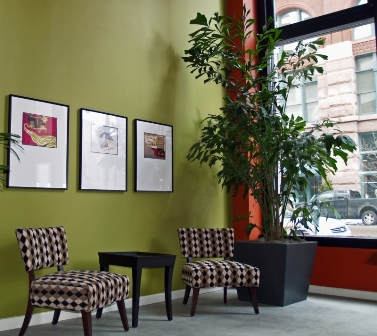
Happy spring everyone! How wonderful it is to throw open those windows and ventilate all of the stale indoor winter air. Love it! Fresh air brings a renewed energy to the soul. With the anticipation of flowers blooming and the earth coming out of hibernation, lets talk color to give that renewed energy a jump-start. Winter can get so drab with the long nights and lack of daytime sun. Thankfully, the days are getting longer and the Missouri Botanical Gardens helps ease the winter blues with their annual orchid show to help brighten those dreary days. I love gathering inspiration from the delicate and breathtaking display and translating it into colors and décor in my clients’ homes and businesses.

spring flowers

Before the weather gets too gorgeous that you’ll be enjoying it outdoors, you may want to consider painting a room or two in your home. Paint can be one of the quickest, most inexpensive ways to make an enormous impact on a space. Whether you hire a professional painter, or you’re a do-it-yourselfer, please don’t cheap out on the paint! Why not? You’re probably wondering why splurge for the pricier brands when you could get a similar look with a cheap one. Though I’m partial to the selections from Sherwin Williams, Benjamin Moore, and Yolo Colorhouse, I’ll admit that almost every brand of paint has some pretty colors. However, the lesser quality paints or stains will not likely cover in the same way as a superior mixture so you’ll likely have to use more to get the coverage required and it may not be as lustrous a finish. So, what are you really saving if you have to purchase more to get results that are not as desirable as the alternative? Nada!

lobby

As a tag note, please make sure that you are making a wise choice with the color. The color you choose for a space can even influence the disposition of the occupants within that space. We’ll need to talk color psychology one of these days to dig into just how much of an impact color can possess over your mood – footnote for a later date… But back to today –don’t be afraid to experiment. If color is not your forte or if you are uncertain about your selection, I encourage you to hire a designer that you trust for an hour or two to give his or her 2 cents. Investing in a professional opinion will save you time and money in the long run. Wouldn’t you prefer to go through this just once anyway?

bedroom

So, what else can you do to be responsible with your paint selection? Let’s talk about the VOC thing. VOCs (or volatile organic compounds) are air pollutants that evaporate effortlessly at room temperature and contribute to the depletion of the ozone layer (greenhouse gases), smog, and poor indoor air quality. Paints and stains are among the leading indoor air toxins. It’s no surprise that most finishes are jam-packed with nasty VOCs that threaten your family’s health until fully off-gassed. According to the EPA, polluted indoor air is among the top 5 hazards to human health. Why in the world would you want to introduce more pollutants into your home if you didn’t have to?
Until recently, VOCs were essential to the performance of paint. Paint of some sort, even if it’s a simple shade of white, is essential in most spaces. Thanks to research and technology, you now have some wonderful options for paint with very low amounts of VOCs or no VOCs at all! Most zero-VOC paints can be mixed into any color, though you sometimes may be limited when using very deep colors.

sitting area

Sherwin William’s GreenGuard-certified, zero-VOC interior paint line, Harmony, is one of my favorite go-to products when specifying paint for a client. Benjamin Moore’s Natura line is another great option. Both are available as a durable primer or top-coat paint in a variety of sheens. Other great resources for VOC-free paints include Green Seal-certified Yolo Colorhouse, Green Planet Paints, American Pride, and Safecoat (just to name a few). Soy-based Green Planet Paints even takes an additional stride by completely eliminating Petroleum from their paints, a step that further reduces the environmental impact associated with manufacturing paint. These products are a little pricier than their smellier counterparts, but what is your family’s health worth? What about the atmosphere around you?
Thanks to this technology, we don’t ever have to go back to the days of chemical headaches and that awful paint hangover feeling the day after painting a room.

10 Simple Practices for Saving Energy in Your Home by Jamie Briesemeister

Saving energy in your home can be as simple as flipping a switch, turning down a thermostat, or changing a light bulb. Here are a few statistics, gathered from a 2008 report by the U.S. Department of Energy that may open your eyes to how energy is spent in your home, with suggestions to decrease energy expenditures.

FACT: 42% of a home’s energy is ‘spent’ on space heating and cooling. 
Reduce your consumption and save when you:
1. Set back thermostats in seldom used areas of the home.
2. Set back thermostats when you leave the house and at night.
3. Heat home to a lower temperature (68°) ~ cool to a higher temperature (78°).

FACT: 13% of residential energy is spent on heating water.
Again, energy savings can be realized through a few simple practices:
4. Insulate your electric hot-water tank, but be careful to NOT cover the thermostat.
5. Lower the temperature on your water heater: a setting of 120°F provides comfortable hot water for most uses.
6. Install a timer on your water heater to turn it off or lower the temperature, when you are away from home for the weekend or on vacation.

FACT: 11% of a home’s energy is taken by lighting.
Decrease your lighting expenditures:
7. Dimming lights by 25% reduces energy consumption by 20% and can extend the life of the light bulb by 4 times or more.
8. Replace interior lighting with light-emitting diode (LED) lights – these are dimmable, have a nice light quality, use less energy, and last longer than compact fluorescent lights (CFL).
9. Open window drapes and blinds to allow natural light to illuminate the space – and when designing a home from the ground up, talk to your architect about positioning windows to use as much natural light as possible.
10. And the most obvious, but often most overlooked: turn off the lights when not needed. Vacancy sensors or a master ‘AWAY’ button can turn the lights off automatically when they are unnecessarily left on.

These simple practices can significantly lower the amount of energy you spend powering ‘the basics’ of your home: heating and cooling, water heating, and lighting. However, it often becomes cumbersome to do these tasks daily, when adjusting to ever-changing living conditions. In this case, home automation may be the key to managing these systems easily, without needing to think about it.

Here’s a realistic example of how this happens in a 4,500 square foot home:

In a three-story home, all of the lights are tied together with one communication system, allowing a press of a button in the Mudroom to ‘talk to’ the rest of the lights in the home. When the home-owner leaves to go to work for the day, she presses ‘AWAY’. All of the lights and electronics in her home turn off, even the ones in the kids’ rooms on the third floor…

This same button press adjusts the thermostat to ‘energy mode’ while the house is vacant and an hour before the kids are scheduled to get home from school, the thermostat adjusts again.

When the home-owner comes home, the garage door opens and a well-lit path turns on from the garage to the kitchen. Since the lights have been replaced with LED lighting, a whole room uses the same power that was once taken by one 100-watt light bulb on at full blast.

At the end of the night, the ‘SLEEP’ button ensures the garage doors are closed, the security system is armed, the entertainment system turns off, the interior lights turn off, the exterior lights dim to 50%, and the whole-house thermostat adjusts again to ‘night mode’. Home-owners fall asleep knowing their home is secure while using the least amount of energy possible.

Green in a Very Big Way
Home automation, coupled with careful selection and design of electronic systems, can have a profound impact on one’s energy consumption – and on our environment. Imagine knowing how many pounds of carbon emissions you save from entering the environment by simply turning your thermostat down a few degrees… you will be amazed at how simple, daily changes can have a huge impact on energy consumption while cutting carbon emissions. If you would like to know more about home energy management through home automation, check out the web articles listed below. You can also contact me directly at Integration Controls: Jamie@integrationcontrols.com

http://www.draperinc.com/Green/pdfs/EnergySavingsSummary.pdf
http://www.homelightingcontrol.org/learning/whitepapers/2008_vacancy_sensors.php
http://www.homelightingcontrol.org/learning/whitepapers/2008_wireless.php
http://www.hometoys.com/htinews/dec07/articles/smartusa/green.htm

The Healthy Abode: Cabinets by Melanie Holden
When you make the decision to implement sustainable practices into your life, education is critical in order to understand what you’re truly looking for in sustainable products. So far, I’ve brushed on water-saving plumbing fixtures and countertops. Let’s chat about cabinets for a while…

Cabinetry is an important investment that creates a significant impact on your space. Not only the comfort-of-your-home kind of space, but also the environment where it was manufactured, all the way to the forest where it came from kind of space.

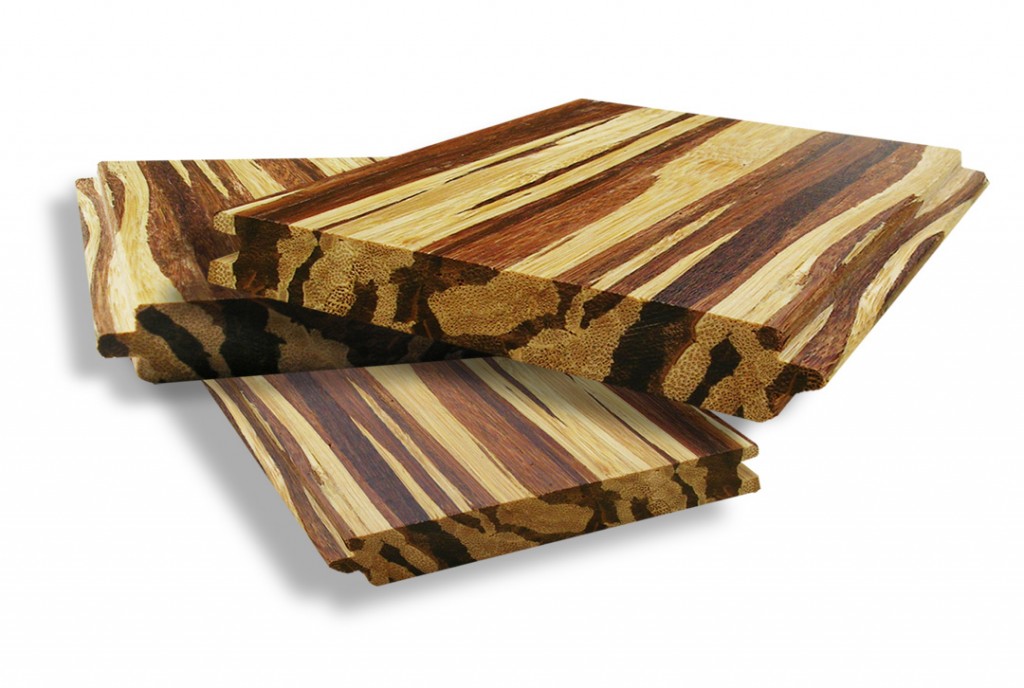
What’s the first thing you think when considering “green” cabinets? The material? Bamboo? Bamboo is a beautiful, durable, option; just remember to be very cautious of where it originates and how it is harvested. There are a few reliable resources for it, but many are not. Smith and Fong’s Ply-Boo is an excellent one. A very scrumptious one, actually…

plyboo

How about cabinets made from reclaimed materials? Are those reclaimed materials local? How far have they been transported to get to the manufacturer, then to you? If your cabinets are made from virgin lumber (wood that has come directly from trees that have been cut down to make them), is that wood FSC Certified? So much to consider! Luckily, we have an excellent local resource called Greenhaus Cabinetsthat can meet any and all of those requests.

So, let’s go back to the responsibly harvested bamboo or hardwood. Remember, it is often manufactured as a veneer in lieu of solid wood. Why, you ask? There are a few reasons, but a notable one is to minimize the natural expansion and contraction that wood goes through with changes in temperature and humidity. Some solid wood cabinets aren’t particularly practical in a kitchen or bathroom. Especially in the Midwest. Want more to consider?

What is the cabinet made of under that veneer? How is the veneer attached to the substrate underneath? How is that veneer actually finished? It doesn’t make much sense to take a smart product like Ply-Boo, FSC Certified Maple, or Missouri Red Oak – only to use a smelly adhesive to attach the substrate that is laden with more VOC-purging chemicals – then smother it with a beautiful finish that happens to be loaded with yet more VOC’s! The horror!

Back up…not so sure what’s so awful about VOCs…or what they are for that matter? VOC stands for volatile organic compound. They are (often toxic) gases omitted from various products. They constantly vaporize into the atmosphere around you, polluting and infringing on your fresh air space. You know that new carpet smell – blame VOCs. Its no surprise that concentrations of many VOCs are higher indoors than out (one great reason for a well-ventilated house or building). Some common health effects are headaches, various irritations, nausea, or worse.

Thankfully, there are products like formaldehyde-free Pure Bond, a nontoxic soy-based plywood. Water and Soy-based finishes are available as well. Combined, these factors contribute to a VOC-free end product. Locally, Centorbi Custom Cabinetry does beautiful work, using formaldehyde-free plywood upon request.

loft

When seriously considering new products to put into the sanctuary of your home, you need to open yourself to the idea of spending a little more money up front. These cabinets are not always price competitive with the throw-away cabinetry you can pick up at homecenters. However, in return you invest in lifetime quality and contribute to healthy living.

All of this, above and beyond your contribution to a healthier environment.

The Myth of Compact Fluorescent Lamps by Jamie Briesemeister

Energy conservation has become a hot topic over the past few years. Consumers are urged to turn off lights, use less hot water, and switch to compact fluorescent lamps (CFLs) in place of incandescent bulbs. I agree with the first two points, but I take issue with the idea of switching every light bulb in one’s house to CFLs. While they do have substantial energy savings over incandescent lamps, they also have a hhandful of negative traits that are rarely discussed as frequently. Here’s what you may not know:

  • CFLs contain mercury. Lamps that are unbroken pose a minimal health hazard – but as soon as they are tossed in the trash and end in a landfill, they are going to break. Once this happens, people may be exposed to toxic levels of mercury vapor and/or other metals, which can be breathed easily – or easily absorbed by the ground in landfills. Proper cleanup and disposal procedures should be followed to prevent mercury poisoning. See web links and numbers at the end of this article for proper disposal information.
  • Most CFLs are not designed for dimming. Dimming CFLs can damage the bulb and/or dimmer that controsl it – thus shortening lamp life. For screw-in CFLs that are dimmable, proper ‘burn-in’ or ‘seasoning’ procedures should occur before dimming. Even then, when dimmed they often dim to 20% or so, then shut off abruptly, or they flicker. Higher performance light fixtures are available, but are not size or price-matched with screw-in CFLs.
  • When CFLs are dimmed appropriately, they do not become visibly ‘warmer’. The color instead looks blue-white, making the environment look washed out and skin look pasty. A stark contrast to the warm white color often desired for a pleasant and relaxing ambiance.
  • CFLs should really be used in areas where lights will be left on for a lengthy period of time.When used in areas where the light is switched on and off frequently, CFLs tend to have a shortened lifespan.
  • Utility or work spaces are best for CFLs. According to the Home Lighting Control Alliance, CFLs should only be used where lighting color and quality are not important.

Luckily, other lighting options exist to provide you, the consumer, with a better overall ‘green’ lighting experience…to save energy, the environment, and ultimately save money and time.

Light emitting diode, or LED, lights are one great option to consider instead of compact fluorescent bulbs. In new construction or as a retrofit solution, LED lights do tend to cost more upfront, however, one LED ‘bulb’ may last as long as 50,000 hours: 50 times longer than that of an incandescent bulb and 5 times longer than that of a CFL. Here are a few more facts in favor of LED lights:

  • LED lights NO TOXIC MERCURY
  • LED lights use less energy than other lamps on the market: 85% less energy spent per incandescent lightand 50% less than a CFL
  • LED lights are dimmable AND produce a warmer light quality. Everything looks more lifelike and the warm, pleasant ambiance desired when dimming is attainable.
  • Overall savings matter. On average, one 65-watt light for 50,000 hours would cost around $325, but with one 12-watt LED light, it costs around $60. Replacing bulbs less frequently saves resources, time and money.
  • See for yourself. Energy calculators help you see your savings over time: http://www.creells.com/calculator.aspx

As you can see, simply swapping out light bulbs for CFLs isn’t the only option available. In many cases, it may not be the best answer at all. With new fixtures becoming available – and prices dropping – consider LED lighting when trying to conserve energy in the home. In the long run, it saves more energy, more money, is dimmable, and produces a pleasant light quality. It’s a win – win!

ADDITIONAL RESOURCES:

CFL disposal information:

Missouri Department of Natural Resources, Hazardous Waste Program: 1-800-361-4827

www.earth911.org 1-800-CLEAN-UP

LED lighting information: http://www.creells.com/index.aspx

Home Lighting Control Alliance: www.homelightingcontrol.org

The Healthy Abode: Countertops by Melanie Holden

So, you’re in the market for a new countertop, and you want something that is earth-friendly, durable, sanitary, low-maintenance, gorgeous, and won’t break the bank. Where to begin and how in the world can an eco-countertop boast all of these features? Let’s talk.

First, to appreciate what makes a countertop sustainable, it’s essential to understand the meaning of sustainability. According to Merriam-Webster’s dictionary, sustainability is “a method of harvesting or using a resource so that the resource is not depleted or permanently damaged.” My two cents – a sustainable product should last pretty much forever, but can be easily reborn, redistributed or repurposed when necessary. You sometimes may pay a little more up front for sustainability, but will undoubtedly end up saving in the long run.

Sustainability is about the “big picture.” It’s not just about “going green” – whatever that means. A truly sustainable product is defined by its content; long-term availability; the manufacturing process; how it’s transported, how far, and by whom. The safety and well-being of workers producing the product is imperative, as well as what happens to the product when its lifetime is over.

Ok, so now that we’re on the same page, back to countertops. Probably the first types of countertops that come to mind are inexpensive Laminate, Corian, and of course, the overdone Granite. Laminate is a thin plastic material that requires a base underlayment (all too often, formaldehyde-emitting particleboard) and is attached to this underlayment with sometimes toxic adhesives. If choosing laminate, look for one with recycled plastic, non-toxic glues, and formaldehyde-free substrate. Due to its pretroleum base, Corian and other acrylic composite countertops are very poor environmental choices – check those off the list. Granite countertops, though beautiful and durable, are not a sustainable choice due to the ecological damage incurred by quarrying practices, and the enormous amounts of energy and pollution produced when shipping this heavy material halfway across the globe. Not to mention the chance of bringing the dangerous carcinogen, radon (among other types of radiation) into your household, emitting from the stone itself. Yikes!

So, let’s first examine concrete as a countertop material. Concrete is durable, local, has low VOC’s (volatile organic compounds, which we will discuss in future posts), can be recycled, and is composed of recycled content. It’s extremely versatile, completely customizable, can be any color of the rainbow, and can boast added character when made in conjunction with recycled glass and other materials. It’s easily cleaned with mild soap and water, and you’ll want to periodically seal the surface. Lucky for us St. Louisans, we have a fabulous local concrete resource, CK Concrete Designs.

concrete countertop samples

Here is an sampling of their color palette.

PaperStone is another interesting option, consisting of 100% post-consumer recycled paper fiber and a non-petroleum nut resin. Who knew how durable paper could be! It is a non-porous surface that is heat-resistant to 350 degrees, plus resistant to scratches and stains. It’s warm to the touch, and has a slight “yield” that prevents glass objects from breaking when dropped or set down too hard. PaperStone comes in a variety of shades, and is comparable in price to some granite or quartz surfaces. A regular application of PaperStone Finish, a natural wax and food grade mineral oil, is recommended for protection against intense heat and moisture, and defends against harmful UV rays that can alter the color.

paperstone countertop

PaperStone countertop display at Solid Surface Resources

paperstone color palette

A view of their color palette.

A truly stunning earth-friendly option is Eco by Constantino. This product is comprised of 75% recycled glass, mirror, and porcelain, and is bound by a corn oil based resin. A completely non-porous material, Eco does not require sealing, and it is nearly impossible to scratch, scorch or stain. Primary maintenance includes simply wiping down with a mild soap and water mixture. The only precaution with this product is that you will dull your knives when cutting directly on the countertop’s surface. Oh, and don’t use products like Draino or floor strippers on it…This, as of many of these products, can be found i St. Louis at Solid Surface Resources.

Still haven’t found what you’re looking for? How about a countertop with 80%-95% post-consumer recycled glass like Vetrazzo, IceStone or Enviroglas? Using glass from reclaimed bottles, dinnerware, construction demolition, even traffic light lenses, and other hard-to-recycle types of glass, these countertops each have their own unique history. Maintenance includes cleaning with warm, soapy water, and regular sealing to prevent against staining. They are as durable as granite and less porous than marble – and comparable in price to both.

ice stone color palette

IceStone Color Range on display at Solid Surface Resources

Natural Quartz sufaces like Cambria, Caesarstone, and Silestone are eco-friendly as well. This material is completely non-porous and non-absorbant and you will never have to seal it, as well as most other natural countertops. Quartz surfaces are stronger than granite, radon-free, and have no impact on indoor air quality – which means no VOC’s. There are countless color options, in both solids and multi-colored varieties. Quartz is incredibly heat resistant, and also hard enough to dull your knife if you failt to use a cutting board.

Bamboo countertops are another option that I must mention, but buyer BEWARE. Though it is a popular renewable resource because it regenerates approximately every seven years, you must be extemely vigilant of the source when selecting a bamboo product. The harvesting practices are not always as sustainable as you may believe. Some bamboo is harvested too early, resulting in a very softened product that is not very durable. On top of that, some countries are actually deforesting their native trees to make way for bamboo forests! Not to mention that so much bamboo comes from the other side of the world and is shipped across the ocean in polluting freight vessels, consuming enormous amounts of gasoline and energy. In some cases, bamboo forests are being harvested by private owners who are endangering the lives of animals that are dependent on these plants for survival. For example, the Bamboo Lemur of Madagascar is just one animal that was named on the recent world report of endangered animals – 90% of their diet comes from bamboo. If considering a wood or bamboo countertop, pleas make sure to use an FSC (Forest Stewardship Council) Certified product, like Plyboo, so you are asured that it comes from a source that employs responsible forest management, and preferably locally..

Stainless steel countertops, when made from a good quality stainless steel (the lower grade, the better) is long-lasting, hygienic, durable and low-maintenance. It is completely recyclable and on average is made from 75% recycled stainless steel crap metal. There is also a recycled ceramic tile as a countertop alternative, but make sure you seal that grout! There are quite a few other environmentally friendly countertops, but I would never finish this blog if I went into details for each and every one of them. Of course, you could also find the ultitmate sustainable countertop by paying a visit to your local architectural salvage dealer to see what treasures they may have to offer.

Related Posts Plugin for WordPress, Blogger...