Healthy Abode: Spa Bath – Part 2 by Melanie Holden
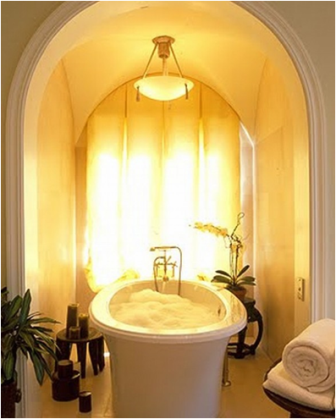
If your summer was anything like mine, it was a hectic one, and Iíd venture to say that weíre all overdue for a little R&R before the busy holiday season kicks into full gear. So, letís pick up where we left off a while back and get back to spa-ing your bath so that you can have that R&R in the comfort of your own home! Hopefully, youíve already incorporated a few organic elements as I discussed in part 1. Maybe you added a pretty plant or two or a few rocks here and there? Now letís move on to one of my favorite subjects, COLOR!

Color has an enormous impact on your feelings in any space ñ not just your bathroom; it is a key factor in establishing balance within the body and soul.

In general, warmer colors such as red, orange, and yellow stimulate while cooler colors like blue, indigo and violet evoke a more calming influence. With that in mind, if itís the ultra-relaxing spa atmosphere you are after, it is preferable to primarily implement calming colors within the space rather than energizing colors. With that said, nothing dictates that a bathroom canít have a bit of stimulating color and still provide a relaxing atmosphere. Every color has its own specific qualities that are beneficial to the therapeutic process, so itís important to focus on the particular therapies that are most significant to you.

When considering the direction to take with your bathroom colors, itís helpful to appreciate the effects any given color may have on your mind and body. So, letís chat our way through the rainbow starting with one of my choice spa-bath colors: blue.

Blue tones generate a sense of peace, serenity and balance. Whether itís azure, cobalt, indigo, sapphire, navy, or aquamarine that strikes your fancy, shades of blue can invoke calmness and invite introspect. Blue is associated with the sky, the ocean, and water in general. The tranquilizing property of blue is helpful in relieving headaches and muscle cramps and is said to have a healing effect on many other types of aches and pains. All of these qualities make blue tones an excellent choice for bathroom color palettes!

Similar to the tranquil qualities of blue, green is classic, calming, harmonizing, detoxifying, and even sedative. It relaxes me just thinking about it! Green is associated with nature, rebirth, growth and money. Have you ever noticed that hospitals often incorporate green into their color schemes? Thatís no mere coincidence. Some shades of green are actually known to have healing qualities and can evoke feelings of security and self-confidence. However, other shades of green should be utilized cautiously, as they can be reminiscent of mold or decay, undesirable in any environment, much less a bathroom.

A blend of blue and red tones, purple is a fascinating, paradoxical color that employs both relaxing and stimulating characteristics of the color spectrum.

It represents royalty, prestige, divinity, authority, and anger. Purple is stimulating, yet meditative, and may aid in detoxifying the body when used in moderation. Physically, purple can provide pain-relieving, tranquilizing, and hypnotic effects. It has been known to enhance intuition and imagination, and reduce stiffness, blood pressure, and body temperature. Purple can provide many positive effects for the mind and body, but when overused it can also prove to cause, create, or exaggerate depression, so use it with care. I typically prefer to see it as an accent color in bathroom applications.

Not surprisingly, yellow is an eye-catching, optimistic, energetic color of awakening. This cheerful, bright color of the rising sun inspires intellectual activity and power. It is a cleansing color that stimulates the digestive system, purifies the blood stream, and has even been known to alleviate headaches. As with many colors, it does have adverse effects when used in overabundance, sometimes creating anxiety and mental tension.

“Gray’s Anatomy” by Kimberly Reuther

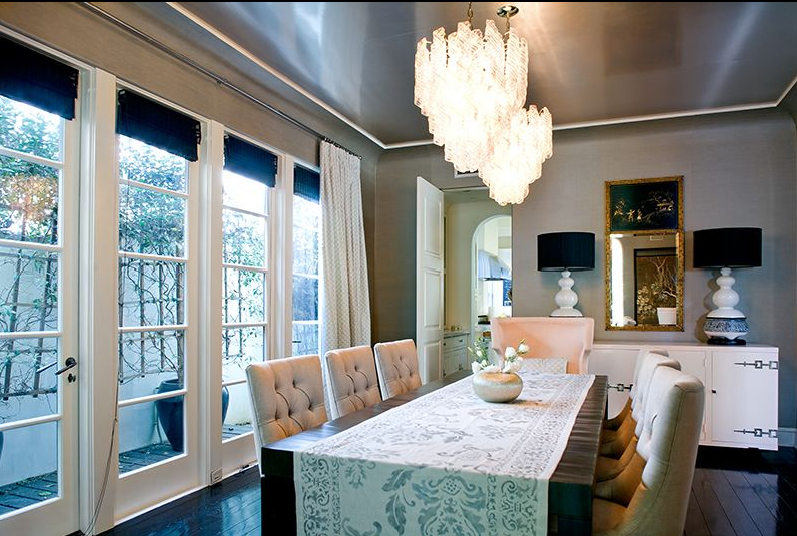
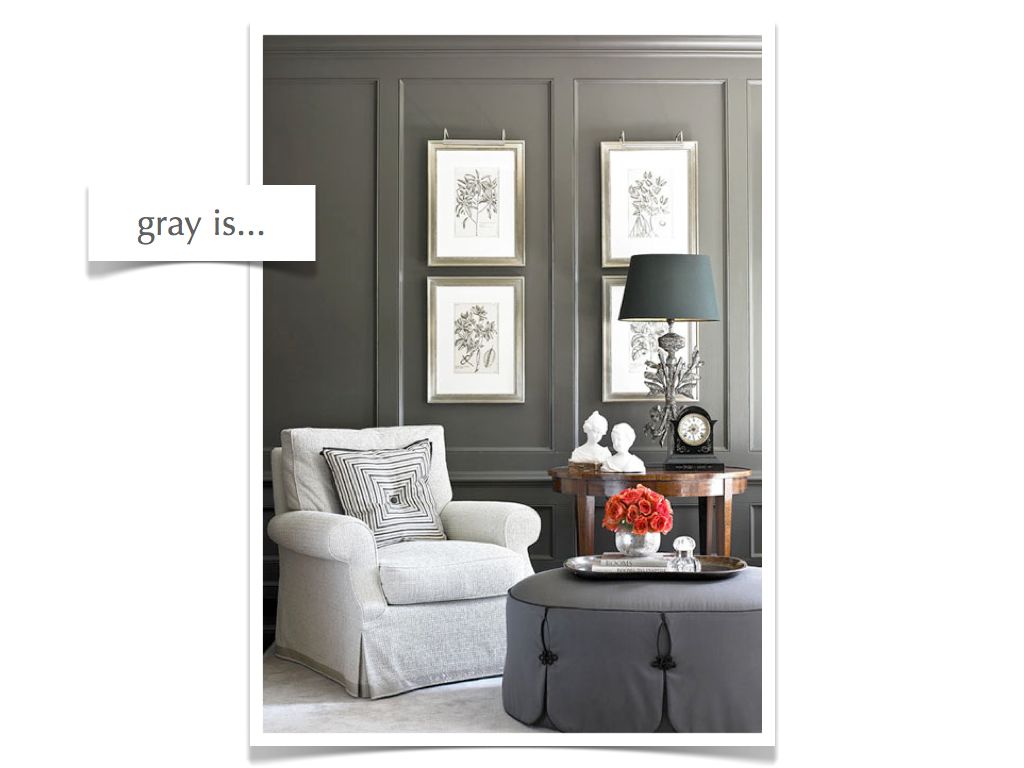
Gray is a significant neutral color that often gets overlooked in favor of the more dramatic black or the happier camel shades.  However, this year, gray is the belle of the ball.  It is enjoying a resurgence in fashion, home design and luxury style.  So, what makes gray such a fabulous color and how do you use it in your home?

The color gray is unique in that the two extremes evoke completely different emotions.  The lightest shade of soft silver is cool, airy and works with fresh color palettes.  Deeper, more intense shades of gray offer new possibilities to a space and provide nurturing comfort.  Another selling point is the color’s ability to play well with others.  Introducing a pop of color (almost any color fits) creates a more dynamic and inviting space.

Another wonderful attribute of this color is it’s ability to transcend defined styles.  Gray can be rustic, masculine, sensual, rich, velvety, casual, contemporary, modern, feminine, traditional, and the list goes on & on.  It is also a wonderful backdrop for colorful artwork as well as a popular choice for candid & architectural photographs.

In light of all these qualities, how can we live without it?

If you are still unconvinced, here a few photos to illustrate my points…stay tuned for Q & A after the images.

Q. What if I don’t want to paint my walls gray?

A.  Painting is one of the easiest ways to incorporate a color, albeit temporarily, into your home.  However, not all of us are up for the task at hand.  These images are examples of ways to add punches of gray without hiring a painter!

Q.  Do I need to stick to a neutral palette if I want to use gray in my home?

A.  Absolutely not.  If you love color, then by all means, infuse your home with color.  Gray elements can provide a balance to your color choices as shown below.

Q.  How much is too much gray?

A.  Partly that is determined by the shade of gray you choose and how much you love the color.  Remember, gray is a neutral so it can serve as the main backdrop with splashes of white or color as accents.  There are no hard and fast rules when determining your color scheme.  Most of it is made up of personal preference.  Get inspired by the photos below.

Previously posted on AT HOME’s website.  View the original post here.  Read more about Kimberly’s work by visiting her website.


Style Defined: Modern Cottage by Kimberly Reuther
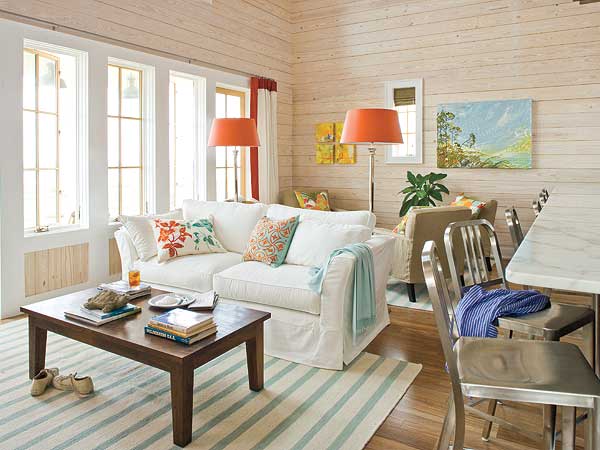
Summer is winding down and you’ve bid your goodbyes to the weekend retreats until next year. What makes these sojourns so relaxing and refreshing? Partly, the absence of “real world” responsibility and maybe more noticeably, the crisp backdrop of furniture and finishes that allow you to breathe easier.

Here are a few examples of these types of places, that I like to define as “modern cottage.” They have a lot of cottage elements but are great at achieving the clean, balance of modern design. The scale and placement of the modern art, accessories, and lighting complement the casual, laid back furniture chosen.

kitchen

dining room

3 Tips for incorporating a touch of “modern coastal” inspiration into your home:

1. Add “pops” of color in the form of paint, pillows, accessories, or artwork.

bedroom

2. Add unexpected modern touches such as a stainless steel farmhouse sinks and chairs.

kitchen

living room

3. Add pattern in the form of colorful stripes and whimsical abstract florals.

dining room

These small changes are sure to keep you relaxing all the way until next summer!
Happy decorating!

Previously written by Kimberly for St. Louis AT HOME’s website.  Read more of Kimberly’s work and view her portfolio at www.kimberlyreuther.com

Can My Life Be Simplified? by Jamie Briesemeister

5 Considerations When Deciding on Home Automation.

1. “Home automation” is not as threatening as it sounds…

The term “home automation” may conjure images of The Jetson’s or Bugs Bunny’s “Home of the Future” where hologram telephones are possible and meals are as simple as zapping a small pill. Poof, instant turkey. While many of these futuristic experiences actually do happen today, the solutions are more realistic than instant pill-food. Automated lighting, a secure house at the push of a button, touch screens that control the whole house. It’s possible right now and it’s not as scary as you may think. Believe it or not, you are already proficient with the concept of “home automation”. Consider this the next time you drive your car, complete with: antilock-breaks, automatic transmission, cruise control, folding side-lights, etc. Move this same concept out of your car, into your home, and start dreaming.

2. Identify your frustrations first.

Electronic systems can be a joy to operate or they can be a royal pain. Consider all of the knobs, handles and switches that you already control throughout the day. There’s a good chance they can be streamlined into one system, saving a lot of multiple steps in your life. Start where you are frustrated: lights ALWAYS on, the pile of remotes, sense of security, or lack thereof. This prepares you to spell out your goals so the companies you call have a general scope of work and can create a preliminary plan to help you meet your objectives.

3. Look at your options and choose a qualified contractor.

Unless you have a design everyone will bid against, your stack of proposals may be complete apples and oranges. Providing a good list of goals (above) and a budget (below) will help, but if your project is large or intricate, you may want to consider hiring someone to design the system first and then embark on search for the right company. Look for CEDIA certification (www.cedia.org), review references, and check the Better Business Bureau (www.bbb.org). Websites and social media sites (such as Facebook or Twitter) are great windows into one’s style of business or services offered. You may even find project galleries, technical tidbits, or other insights that make you lean toward one company or another. Go with whom you feel the project is right and if things change, consider calling the other guys.

4. There must be value in the solution for it to benefit your life.

If something is bugging you about the way you interact with the electronics in your home, what is it worth to you to fix it? If it is worth $5/day to eliminate the nightly light shut-down-route for five years, that’s $9,125, a realistic starting point for lighting control in the most-often used rooms of your house. For new builds, it’s not unheard of to spend 10-15% of the home’s value on a home’s electronic systems. Divide it out to the per-day cost and ask yourself if it’s worth it to you. Use these numbers as your budget, and consider sharing this information with the companies you call. The one with the best solution, given the budget, might be up for hire.

5. Prioritize, but do not forget about planning for the future.

For various reasons, experiences you may ultimately want for your home may not be available currently. Perhaps it’s the budget, the project timeline, the special order, the technology, who knows. Consider your solution like an a la carte menu and pick what’s important for you now. Create a growth plan with your contractor to identify certain future needs: cameras in the nursery, media room in the basement, etc. This way, you get to enjoy what matters most currently ñ while planning for the future so that your system will be enjoyed for years to come.


Style Defined: Modern vs. Contemporary by Kimberly Reuther
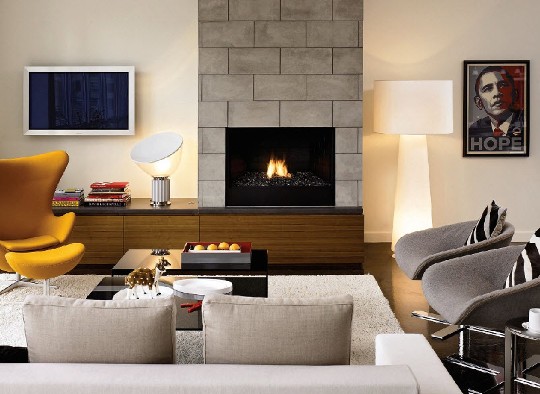
You see a cocktail table and fall in love. You wonder if it would work in your home. You try to describe your home to the salesperson. He/she asks “Is your style modern or contemporary?” Your mind scrambles. Am I modern or contemporary? How do I know? How do I define my style?

This scenario probably plays out in your head every time you head out furniture shopping or when you are browsing through magazines. When shown a photo, chances are you know if you like the design aesthetic right away. But if you are asked to describe it, you are stumped. I’m not a designer, you think…how would a designer describe my style?

Relax, design is very hard to define, especially in the context of your personal style. The beauty of style is just that, it’s all yours to define. That being said, there are some basic design principles to help differentiate the elements of each style.

Let’s start with two that are often used interchangeably but, I believe, are in fact very different: modern & contemporary.

Contemporary design gained popularity in the 80′s and is usually characterized by unusual color palettes, graphic patterns, slick surfaces, asymmetrical designs and rounded forms. Lots of stainless steel, lucite and polished marble details abound in this style. You also will be hard-pressed to find a straight line with a multitude of curves and irregular shapes dominating the scene.

living room

living room

glass doors

bedroom

vanity

Modern design elements, on the other hand, have been around since the mid-century and go in and out of fashion as design trends evolve. Modern fundamentals are often represented by clean lines, grounded color palettes, warm wood tones, symmetry and balance in the space. Striped area rugs, linear patterns and natural elements contribute to an overall uncluttered aesthetic.

bedroom

bedroom

dining room

living room

kitchen

Modern design has most recently become incorporated into the mainstream by way of the hospitality industry. Think crisp, clean “hotel” bedding and spa-like suites that leave you craving the same style in your own home. Who doesn’t want to feel like they are on vacation 24/7?

hotel room

As I mentioned before, the great thing about your style is that it is all yours to define. You can pull elements from both contemporary & modern design and have a cohesive home.

But we will leave that for a future discussion. Right now, I’m heading off to my “hotel” bed!

Previously written by Kimberly for St. Louis AT HOME’s website.  Read more of Kimberly’s work and view her portfolio at www.kimberlyreuther.com.

luxe trend: malachite by paige gilbertson

This is Kelly Wearstler’s design for the Viceroy in Miami and it was blogged about on Apartment Therapy.

Malachite Accessory finds:
Vivian Mirror by Made Goods (actually used by Wearstler in another portion of the lobby) available at Niche


Malachite Rug by Tony Duquette


Healthy Abode: Spa Bath – Part 1 by Melanie Holden
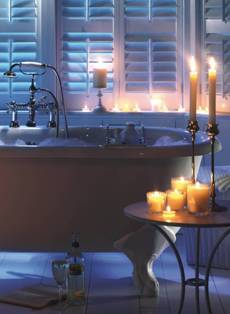
Are you too busy for a regular spa trip, but in desperate need of a little pampering? Join the club! It seems like we’ve all been required to do more with less over the past few years, which makes for much busier, more stressful lifestyles. Needless to say, all this work and worry is not good for your health or frame of mind. Excessive exposure to stress can lead to or exacerbate serious health problems like sleeping disorders, heart disease, depression, obesity, and high blood pressure just to name a few. It is time to take relaxation into our own hands! Many overworked, underpaid, stressed-out people are turning to the bathroom as a soothing sanctuary for rejuvenation and retreat to supplement or even replace those few spa trips they have the time and money for.


But wait, your bathroom just doesn’t exude the stress-free spa oasis atmosphere you’re dreaming of? Well, I have some thoughts to help you transform it in a way that will entice each and every sense. It turns out that I have a lot of thoughts on this subject, because once I started putting those thoughts on paper, I couldn’t stop! There are so many ways to “spa your bathroom” that to do this subject justice, I decided to break this one up into a blog series.

So, part one, here we go! The spectacular thing about spa’ing your bathroom is that you can go all out or just add a few personal touches to what you already have. If you’re not in the market for a gut rehab of your entire bathroom, you can do plenty of little things to create a calming spa-like ambience. Ultimately, trust your senses and choose soothing colors, textures, sounds, scents, and soaps to nurture your body and soul.

But first, you must de-clutter! Clutter creates a sense of unease and chaos, making true relaxation virtually unachievable. Get organized and get rid of anything that you don’t love or is not functional. Make sure that everything has a place and that things are stored neat and organized.


Once your de-cluttering mission is complete, its time for the fun part: finishes! Whether working with an existing bathroom or starting from scratch, think natural. Natural colors, textures, and materials add a fresh, organic feel to any space. Incorporate natural stone, actual stones, or recycled glass for an organic, earthy feel in your bathroom.

Deep, rich wood tones and bamboo elements add warmth and elegance to a room. Wood elements will also promote personal growth, inspiration, creativity, and passion.

Incorporating a few metal elements into your bathroom will create harmony and can balance a space. Various types of metals are even associated with good health. Just don’t overdo it; too much metal can cause anxiety. Keep in mind that the goals are harmony and balance. Are you starting to feel a little Zen yet? Many of these spa strategies align effortlessly with Feng Shui principals; hmmm, sounds like a great subject for a future blog, don’t you think!

Plants are another way to enhance your bathroom atmosphere.

Not only a natural accent, live plants clean the air and bring the outdoors inside, adding color and texture. Tropical plants thrive from the bathroom humidity and herbs provide naturally fresh scents. Your bathroom should emanate fresh, clean air, not a chemical jumble of artificial fragrances, air fresheners and cleaning products. Display small pots of lavender, rosemary, sage, or peppermint. Potted fresh herbs will not only enhance your bathroom atmosphere, they can be used for your very own custom aromatherapy bath! Pick a few stems from your favorite herb du jour, wrap them in cheesecloth and tie them to the tub faucet so the water flows through them as the tub is filled.

Check back soon for part 2 of Spa Your Bathroom where I’ll elaborate on the colors you may want to consider for your spa bathroom, what effects particular colors can have on your mood and what chromatherapy is all about. Until then, happy bathing!


high & low: gourd lamps by paige gilbertson

A decorator staple, the gourd lamp can blend seamlessly with most any style interior. Their simple, fluid, strong silhouette is graceful, but commands a presence.  Additionally, the gourd is most commonly recognized as a symbol of longevity and good fortune, stemming from ancient eastern traditions where the gourd was once used as a drinking vessel.

Pricing: Spitzmiller lamps go for around $1,500 to $2,000 per larger table lamp (the pair shown)  vs. Robert Abbey lamps for around $270.


luxe trend: faux turtle shells by paige gilbertson

This is Kelly Wearstler’s Design for La Marea in The Tides South Beach

The goods: Karen Roberts Collection

The application:


5 questions with Peter Julian of Scalamandre fabrics by Victoria Dreste

Peter Julian is the representative for Scalamandre fabrics in St. Louis & Kansas City. He assists designers on their projects and is lucky enough to spend all day “swimming” in luxurious fabrics!

Vicki: Tell me about your background, how you got started in design.

Peter: My parents were interested in design and architecture. My design tastes are similar to the Scalamandre look, elegant, updated traditional.

The travel part of my job is something I enjoy. I work with designers from St Louis to Kansas City.

V: Where do you find inspiration?

P: I look at everything, TV, movies, magazines. You can find inspiration anywhere. From that you will find your personal style. Find your inspiration and you will find what works for you.

V: Favorite trend?

P: The fashion forward damask pattern is a trend I like. It is a damask that is more contemporary and transcends style.

V: Can’t live without for one day?

P: Black Berry all day, everyday. When on the road from St Louis-Kansas City iced tea from QT it’s a must have. Something to read now, Girl With the Dragon Tattoo.

V: Best piece of advice for homeowners?

P: When designing or decoration your home don’t be afraid to start. Begin with the basic elements, a sofa, an area rug, and build from there.


Related Posts Plugin for WordPress, Blogger...