From White Box to WOW by Kimberly Reuther
Most of us love, or at least appreciate, architectural moldings and finishing touches in our homes.  However, not everyone’s home is “born” with these elements.  I am often asked how to decorate a room that looks like a white box.  Bare walls, no moulding, basically a square.  While seemingly uninspired to some, for designers this is a wonderful challenge.  We get to create!

Here are my ideas to help differentiate your space from every other “white box” on your block!

– First, you could experiment with adding simple elements such as a picture ledge.

These can be installed at various heights depending on it’s desired function.  In this instance, we did the shelf along one wall above the headboard and the pictures and objects are within reach to change out regularly.

In the second photo, the ledge was installed higher up on all 4 walls as a purely decorative element.  This is great in a contemporary home that doesn’t have crown moulding.  Make sure you allow enough space for a mirror or TV to hang on the wall.

– Another idea is to add really special elements that don’t make you miss the architectural details.  These uniquely beautiful pendants make a statement all on their own.

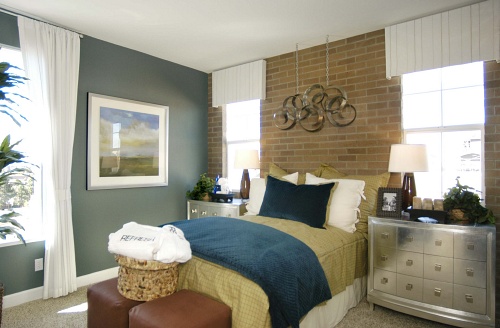
– Just because you don’t live in a loft doesn’t mean you can’t achieve the look.  This home is in the middle of a brand new development outside of San Jose.  No lofts for thousands of miles.  The brick wall adds a much needed urban element to the space.

– A basement is really an extension of your home and offers much needed entertaining space.  Boring white walls and extra high window sills left this vast lower level feeling lifeless even after the furnishings arrived.  My solution was to add beadboard paneling up to the windows on 2 major walls.  We painted it a rich caramel color which tied into the color scheme and immediately warmed the whole room.  Topped off with a picture ledge full of personal accessories and this room has been transformed into an inviting family space.

– Another area to consider is the coffered ceiling.  More often than not, the builder stops with just the soffits that step up.  Adding in crown moulding and even painting an accent color will make such a finished statement to the room.

Some of these projects you could tackle in a weekend, others require a professional.  With the right amount of imagination, you too can be proud of your home’s unique appeal!

Previously written by Kimberly for St. Louis AT HOME’s website.  Read more of Kimberly’s work and view her portfolio at www.kimberlyreuther.com.

The Right Stripes by Kimberly Reuther

How do you feel about stripes?  I personally think a room isn’t complete without a stripe fabric, rug, etc.  Stripes are a fundamental part of design. They can change the look of a piece of furniture or a room by being bold or subtle.  Stripes can be edgy, playful, modern or sophisticated depending on the size, color and placement.

So, which ones are right for you?  I’ve compiled a group of beautiful spaces using stripes to their advantage.  See if this helps you narrow down your options!

A well-tailored room gains energy from the striped rug.

This bold cabana stripe awning is the perfect backdrop to the colorful furniture and lush plants.

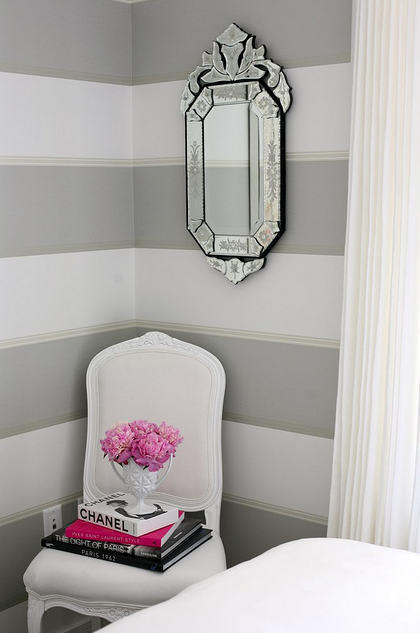
Wide horizontal stripes along with moulding accents blend beautifully with the baroque elements in this room.

This playroom screams enthusiasm partly due to the varied colorful stripes on the wall.

I love how this traditional room is transformed by a bold color palette and the vibrant striped rug.

This sofa from Crate & Barrel is like a men's suit, handsome and timeless.

This is not your grandmother's sofa. Reupholstering an antique in a modern stripe is the perfect juxtaposition.

Skinny stripes form a soft balancing backdrop for a room that is full of collected pieces.

Another great example of a bold stripe on a traditional piece of furniture.

Previously written by Kimberly for St. Louis AT HOME’s website.  Read more of Kimberly’s work and view her portfolio at www.kimberlyreuther.com.

Real Simple: Ideas for Simple Glass Vases by Kimberly Reuther
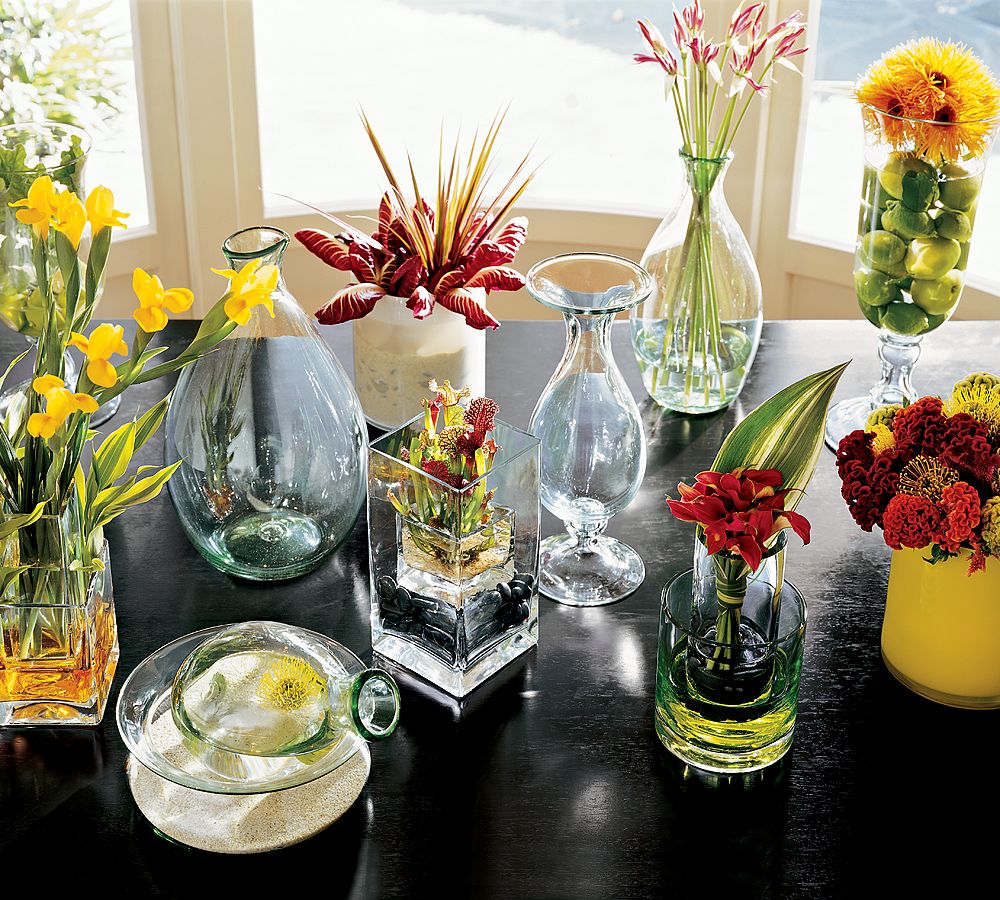
Ahh, it’s spring, the season of fresh flowers and fresh ideas for your home.  No doubt, you’ve been cleaning out cabinets and getting rid of things to prep for the summer months.  If your cabinets are like mine, you have a multitude of glass vases  from flowers being sent to you.

But that’s where you get stuck.  How do I display these simple vases without shelling out money every week for fresh flowers?

Here are a few examples for spring parties or everyday arrangements for spring.

1.  Ultra simple, white candles and rocks.  White candles come in a variety of shapes and sizes so you should have no problems finding one to fit your vase.  You can add rocks to anchor the candle and the result is an understated addition to your dining table.

2.  Collected works.  Scavenge your home or garage sales for mis-matched vases of a similar color scheme.  No need to add fancy flowers, wild flowers from your garden add a hint of nature while the vases make the statement.

3.  Add pops of color for super cheap!  Plain old food coloring, water and white candles mixed together and voila!  Instant centerpiece!

 4.  Fresh flowers aren’t out of your league.  Buy an inexpensive mixed arrangement and break it up in many different vases.   One flower per vase can look beautiful, it’s all about how you arrange it.

5.  Who says vases are for flowers?  Use what you have around your house or garden to fill the vases and add color to your table.  Lemons and limes are great because they are small and vibrant.  Use your imagination and make it up as you go along!


Previously written by Kimberly for St. Louis AT HOME’s website.  Read more of Kimberly’s work and view her portfolio at www.kimberlyreuther.com.

Spotted: Industrial Chic Barstools by Kimberly Reuther
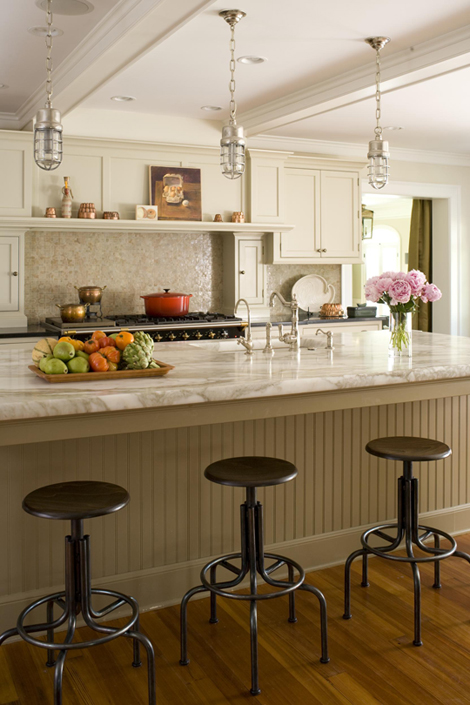
We are seeking different.  We want to have a conversation starter when friends admire our homes.  We are seeking unexpected touches to add to the mix.

Enter industrial chic barstools!  They are popping up everywhere!

But how do you know which one is right for you?  They can be used in both modern and traditional settings and these images are great examples to help you decide!

barstool from West Elm

barstool from Wisteria

barstool from Restoration Hardware

barstools from Crate & Barrel


Previously written by Kimberly for St. Louis AT HOME’s website.  Read more of Kimberly’s work and view her portfolio at www.kimberlyreuther.com.

Style Defined: Modern Glamour by Kimberly Reuther
If you are like me, you’ve become accustomed to a certain amount of “bling” in your life.  From sparkly cocktail rings to sequined pumps, the dazzling effect gets us through the dreary winter days.  As is the cycle with fashion and design, this has spawned the return of a pre-depression era design trend.  Glamour and luxurious goods were mainstays of the post-war 20′s both in fashion and homes.  This time around, we are opting for glamour with a modern twist.  This is such a beautiful design style and done right can look timeless, not trendy.  I could talk for hours but I will entice you with a few photos instead!

1.  Texture: First and foremost to achieve modern glamour, you have to pay attention to textures.  Luxurious velvets, satin, silk, fur all play an important role in evoking the glamourous feeling.  However, be sure you are balancing these appropriately.  You wouldn’t go out dressed head to toe in satin and sequins…well maybe you would but only on New Year’s Eve!


Bedroom Inspiration

Notice the warmth of the floors compared to all the velvet, satin and gilded textures in this room from Traditional Home.

2.  Pattern & Contrast: Bold patterns can contrast off solid pieces to add interest.  You can also use intense color accents or the combination of black and white which is always pleasing and equally dramatic.

Bathroom Inspiration

Here is a bathroom from House Beautiful which demonstrates this contrast nicely; also note the metallic square pouf!

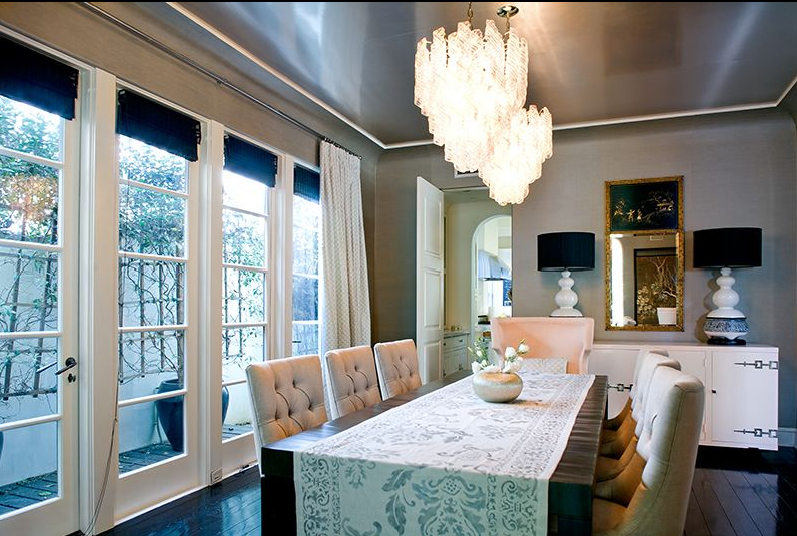
3.  Sparkle:  A lady needs plenty of mirrors to reflect her best self!  Glamour wouldn’t exist without reflective surfaces, shiny objects and shimmery fabrics.  Pick wisely, know when to say when.  It is often advised to eliminate one piece of jewelry before leaving the house.  Use this as a guide when adding “bling” in your home.


Dining Room Inspiration

This photo from a design blog is a great example of the appropriate amount of sparkle; keep your focus on one main element and you can’t go wrong.

4.  Balance:  Glamour begs for over the top tufting, ruffles, curves and modern prefers sleek lines, understated textures.  Keeping them in balance will ensure a timeless look to your space.

Living Room Inspiration

The different lines and textures complement each other in this photo from Horchow.

5.  Expect the unexpected: Make sure you are incorporating interesting elements throughout the space.  Use white patent leather on a traditional wing chair, add in a pop of bold color or show off your collections of diamond studded skulls.  Whatever makes you happy and defies convention is sure to be a conversation starter.


Living Room Inspiration

This image from Les Choses de Marie illustrates my point.

6.  Final touches:  Indulge in your fantasy of lounging in a beautiful robe while your husband mixes you the perfect dry martini.  Include a chaise lounge and/or a mobile bar to remind yourself to relax and enjoy life even as chaos surrounds you…maybe this is just my fantasy!

Chaise Lounge

This sleek yet comfortable chaise lounge from Williams Sonoma Home fits the bill perfectly!

Previously written by Kimberly for St. Louis AT HOME’s website.  View the post here. To see more of Kimberly’s work, visit her residential design website here.

Tips on Achieving Balance by Kimberly Reuther
Who doesn’t need more balance in their lives?  We are all seeking the right combination of work and life, income and expenses, needs versus wants.  In design, we are striving for a balance of scale, proportion, and textures in the rooms we create.  In addition, there is an increasing desire to balance aesthetic appeal with function, especially in the case of technology.

Here are a few photos and tips on achieving balance in design.


Tablescape at Pottery Barn

This dining room tablescape illustrates asymmetrical balance of shapes and textures.  The cream and silver color scheme is punctuated with pops of green.  The slender tapers add height without being overpowering and their form is complemented by the spheres below.


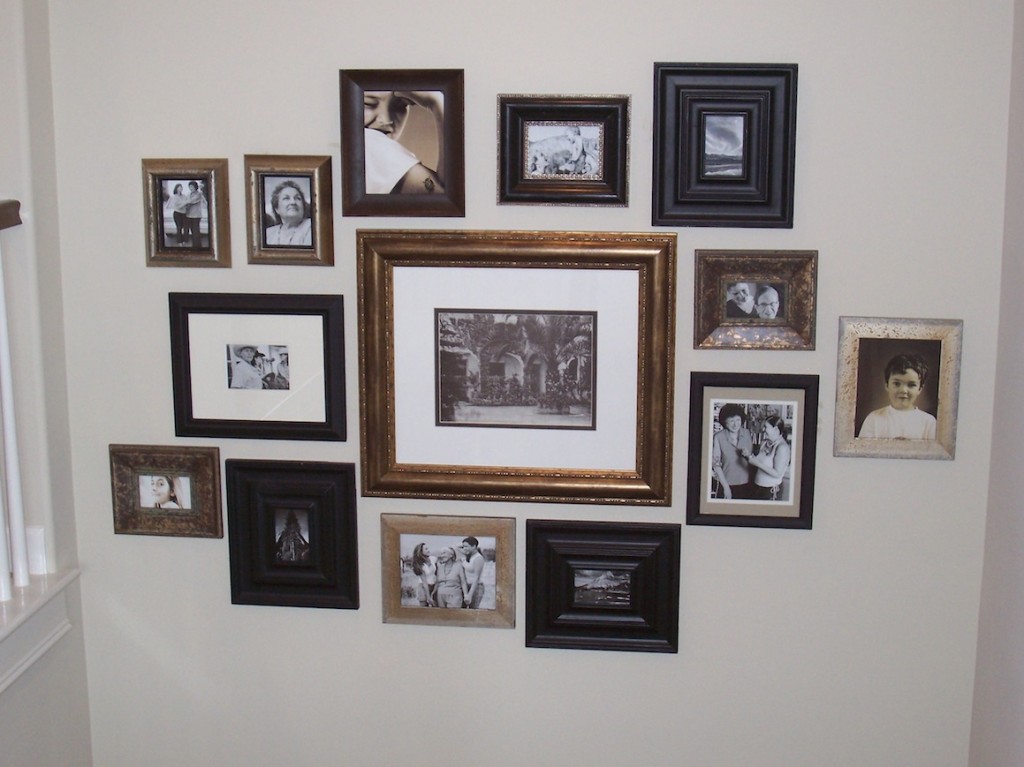
Art collage in stairwell

An art collage of this scale is balanced by the larger photo in the center.  The variation of frame colors and mat choices combined with the lack of color in the photographs creates a cohesive grouping.


Loft Display by Kimberly

Balance in this room is achieved via color and texture.  The rough composition of the brick walls combined with the warm wood ceilings is contrasted by the sleek white furniture and lighting.  The butter and putty color scheme enhances the existing concrete and natural maple woods.  To avoid an overly stark, minimalist space, we added the playful circular themes in the art and bedding.


Modern Living Room by Kimberly

This client had a unique affinity for clean lines and brocade design elements.  We incorporated solid, modern furniture pieces with a few touches of the French-inspired elements to constitute harmony in the space.  The damask wallpapered panels take the place of art and balance nicely with the scale of the walls and the furniture.

Previously written by Kimberly for St. Louis AT HOME magazine. View it here. View more of Kimberly’s work here.


“Come & Knock on Our Door” by Kimberly Reuther
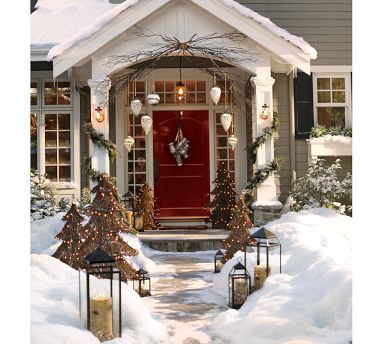
Holiday Tips for Your Front Entrance

There’s a quote, “you never get a second chance to make a first impression.”  Never is that statement more true than at the holidays as you prepare to welcome dozens of guests and proudly showcase your home in all its festive splendor.  By now, you’ve brought out box after box of ornaments and garland for the tree, you’ve traded your first born child for the dining room centerpiece, and you’ve tucked beautifully wrapped packages in every nook of your home.  But don’t forget your front door & walkway as this is truly the first impression of your home.

Here are some tips and photos to help you make it just as stunning as your interiors:

1.  Think outside the circle.  Yes, the typical circular wreath can be beautiful on your front door and there are so many varieties.  But why not do something more unique?  I love this idea of using stockings on the door; it adds so much personality.  I’m also always a big fan of the coned swag which complements the shape of your front door.


Twigs & Moss Swag


Front Door Inspiration

Williams Sonoma Tree Wreath

2.  Make a statement.  Again, this their first impression so don’t be afraid to go overboard with ribbons, garland, lanterns, hanging ornaments, oh my!  Add details to your existing architectural features or just make it up as you go along!  Incorporating elements into you walkway makes a cold walk to your door much more inviting!

Make a Statement


Twigs & Moss Inspiration

Extend Your Entrance

3. Be organic.  It’s outside so it doesn’t need to look like a staged holiday card.  Make it asymmetrical, add a few branches and functional elements.  Forge a ribbon out of tree bark, or add feathers for a bit of unexpected whimsy.  As long as it reflects your personality, you can’t go wrong!

Feathered Wreath Idea

Twigs & Moss Bark Wreath

Rustic Inspiration

by Kimberly Reuther, Interior Designer & Founder of DesignSpeak (previously posted on AT HOME’s website).  Read more of Kimberly’s blog posts here.

Photos courtesy of Twigs & Moss and Pottery Barn


Bottom Line: White Kitchen Countertops by Kimberly Reuther
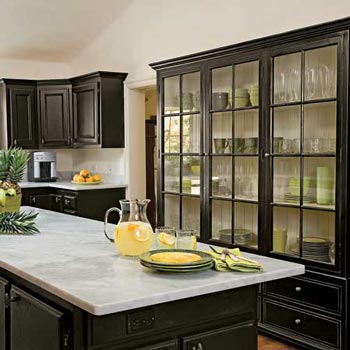
You’ve seen them everywhere lately, it seems.  No, I’m not talking about holiday decorations (although that is true, too).  I’m talking about white countertops, mainly marble.  They are in design magazines, on TV shows, in hotels & restaurants and even your neighbor’s newly renovated kitchen.  They are beautiful and alluring yet you are wondering if they are right for your home with 3 kids, 2 pets and a less than tidy husband.  But mainly you are asking yourself, “what’s the bottom line?”.

Kitchen Inspiration

Kitchen Inspiration

Here is some insight into the more popular choices and how they work with your lifestyle and your budget.

White Marble: Marble is a very porous natural stone and is less durable than granite, which is why it is isn’t commonly used in American kitchens.  It is prone to scratching, staining and chipping.  While it is very beautiful, there is a good amount of maintenance that keeps it looking that way.

All natural stone needs to be sealed (and re-sealed periodically) to keep out moisture and resist staining but it is not an impenetrable shield.  You have to be more careful with marble and acidic liquids (lemon juice, red wine) which will stain or etch the marble.  Also, some bath products, like sugar scrubs will etch marble.  It is a good idea to always use a cutting board, both to protect the sealer and your knives as well as guard against bacteria.  Lastly, use hot pads or trivets to protect the stone from heated cookware.  Of note: most marble is available polished or honed (matte) and has a variety of edge options.

Before you get discouraged, keep in mind that Europeans have been using marble for sculptures, building facades and of course countertops for centuries.  It has proven that it will stand the test of time, it just won’t look the same as the day it was installed.  Here are two of my favorites:

Carrera Marble: This is a more readily available white marble with a slight grey cast.  Slabs will very greatly from light grey to a mid tone grey.  There is a lot of soft movement in the dark grey veining; some slabs maybe more “busy” than others.  It is very important to hand-select your slabs to your personal taste.  Carrera marble looks beautiful with polished nickel fixtures and is available in a range of coordinating tiles to complete the space.

Price Range: approx. $70 – $80/sq. ft.*

Close-up of Carrera Marble

Carrera Marble Bathroom Countertop

Calacata Marble:  If you are looking for a creamier white marble with warmer, taupe or camel colored veins, this is it.  These marble slabs are more exotic and therefore come with a much higher price tag and possibly longer lead times.  You also want to hand-select this stone as it has a lot of variation.  Nonetheless, from a designer’s perspective, Calacata marble has such an exquisite aesthetic that it almost doesn’t compare.

Price Range: approx. $120 – $150/sq. ft*

Close-up of Calacata Marble

Calacata Marble Kitchen Countertop

Quartzstone:  Manufactured quartz has become an increasingly popular choice in recent years, for both commercial and residential projects.  It is more durable than granite, does not have to be sealed, requires little or no maintenance, is anti-bacterial, has multiple edge options and some colors even include recycled content.

Manufacturing stone to give it the best possible features & benefits is a little like gene mutation to me.  However, once I saw slabs of this installed, I was very impressed.  I do think the granite-looking color choices need a bit more work but they have really excelled at the marble and limestone alternatives.  In fact, they keep getting better at it.  I often refer clients to explore these options as alternatives to white marble if maintenance is a major concern.

Price Range: approx. $65 – $95/sq. ft.*

Caesarstone Misty Carrera: One of the first of its kind and still a favorite.  It’s soft grey background with darker grey veins has a subtle movement that fools the eye into thinking it may be marble.  It is available in both honed and polished finishes.

Close-up of Caesarstone Misty Carrera

Caesarstone Countertop

Zodiaq Bianco Carrera: I love this because they have succeeded in adding large scale movement to a manufactured product.  It is also of the creamy white family which is rare to find and is equally stunning in traditional or contemporary applications.

Close-up of Zodiaq Bianca Carrera

Zodiaq Countertop

Concrete:  Want something more modern & less busy? I have to mention this because I am also a fan of this material for several reasons.  I own a white concrete countertop (2 years & counting) and it is beautiful and durable.  It was manufactured by a St. Louis company and it is made of concrete in the form of a powder.  They are able to make any color out of a paint fan deck, can make integral sinks, and have several unique edge options.  They mix it together, mold it, put a sealer on it and deliver it just like a regular countertop, no on-site pouring.  It is not porous so it doesn’t need to be resealed as often as natural stone, it is stronger than granite, has recycled content and is made here locally so it is very good for the environment.   I had them do a custom “pure white” for me and I love how the color turned out.  Of note: different finishes are available but there is no movement or veining in this product.

Price Range: approx. $70 – $80/sq. ft.*

My white concrete countertop

Bottom Line:  Americans tend to base their selections on how well things “age” and we are inclined to replace things without letting them age “gracefully”.  Keeping longevity and your budget in mind will help you make the best selection for your lifestyle.

*Note: pricing by square feet is for general use and is best for budgeting purposes.  Actual pricing for your project depends on a lot of variables including size, cutouts, edge options, color, etc.  Pricing estimates provided by CK Concrete, Hallmark Stone & ISC Surfaces

Originally written by Kimberly for AT HOME’s website.  View the post here.  You can see more of Kimberly’s work here.


Style Defined: Modern Cottage by Kimberly Reuther

Summer is winding down and you’ve bid your goodbyes to the weekend retreats until next year. What makes these sojourns so relaxing and refreshing? Partly, the absence of “real world” responsibility and maybe more noticeably, the crisp backdrop of furniture and finishes that allow you to breathe easier.

Here are a few examples of these types of places, that I like to define as “modern cottage.” They have a lot of cottage elements but are great at achieving the clean, balance of modern design. The scale and placement of the modern art, accessories, and lighting complement the casual, laid back furniture chosen.

kitchen

dining room

3 Tips for incorporating a touch of “modern coastal” inspiration into your home:

1. Add “pops” of color in the form of paint, pillows, accessories, or artwork.

bedroom

2. Add unexpected modern touches such as a stainless steel farmhouse sinks and chairs.

kitchen

living room

3. Add pattern in the form of colorful stripes and whimsical abstract florals.

dining room

These small changes are sure to keep you relaxing all the way until next summer!
Happy decorating!

Previously written by Kimberly for St. Louis AT HOME’s website.  Read more of Kimberly’s work and view her portfolio at www.kimberlyreuther.com

Like a Well-Aged Wine…Vintage Furnishings are Being Uncorked by Kimberly Reuther

We’re finally catching on…albeit slowly

For centuries, our contemporaries around the world have been perfectly content living in vintage buildings and homes.  With peeling plaster walls, dramatic moldings and herringbone wood floors, these interiors are reminiscent of previous decades and remain intact for new generations to appreciate and enjoy.  Americans, however, have long favored the “new” versus keeping or reinventing the “old”…It was, after all, how we were discovered and founded that instilled this behavior in our culture.  Maybe the term “New World” was on too many advertisements back in the 1700′s!

Not all bad, remember, it was our determination to mass produce things more efficiently that allowed Henry Ford to popularize the assembly line for the model T.  To this day, food, clothing, electronics, furnishings, to name a few, are still produced in a similar fashion.

In recent years, Americans are starting to realize the impact of our global “footprint” on the rest of the world.  Combine that awareness with a crippled economy and we are witnessing a “light bulb” moment in American homeowners with more diligent spending and a furniture perspective in which “vintage” just became “new.”

Here are a few tips for incorporating this design aesthetic into your home:

1.  Reuse what you have  – Fashion a slipcover on an aging sofa, give an old dresser a fresh coat of paint or turn a few unworn clothing pieces into pillows.  Collect unused furniture from relatives and friends to reuse in your home.  Display a collection of mis-matched plates as art.  Recycle old work equipment into colorful cocktail tables.  Vintage looks don’t have to be drab or stuffy; add punches of color to offset the aged pieces.

2.  Expect things to age gracefully – Marble, wood, cotton, limestone, bamboo, granite, wool are all natural materials and will not look the same in 15 or 30 years as they did when they were purchased  That doesn’t mean they need to be thrown away or replaced.  Think of the “scars” on your kitchen island as war wounds that should be proudly displayed to neighbors.  Keep in mind, these materials have been used for centuries and will last as long as you will.

3.  Purchase furniture as an investment – The value of antique furniture is endurance.  Does IKEA have endurance?  Seek out quality and you won’t have to re-purchase all your furniture every 4 years.  This is especially true for upholstery and casegoods.  Upholstered pieces can be recovered, restuffed and reborn.  Wood pieces can be refinished numerous times.  Do your homework and take care of your furniture to enjoy for decades.

4.   Add architectural elements, better yet, buy an antique…house.  St. Louis is fortunate to have a lot of beautiful homes with stunning architectural features inside and out.  Why try to reinvent the wheel by building a brand new home?  The amount of charm and character in an older home can far outweigh the costs of renovations if you choose wisely.  If you are looking to add details to an existing home, crown moulding and door casings are the first place to start.

5.  Last but not least, uncork a bottle & toast to your accomplishments!

Previously written by Kimberly for St. Louis AT HOME’s website.  Read more of Kimberly’s work and view her portfolio at www.kimberlyreuther.com.


Related Posts Plugin for WordPress, Blogger...