Intro to “Designing Small is Designing Smart” by Derek Maschek
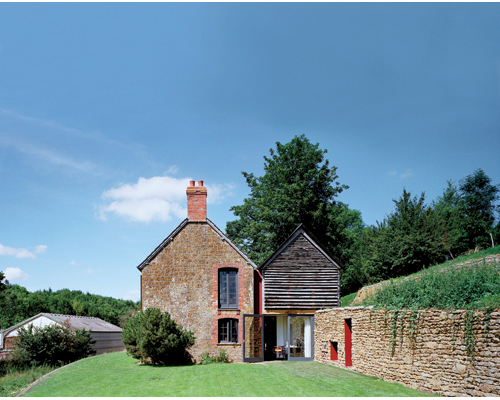
Smarter and Smaller Houses, an Introduction to Design

Last year, Merriam-Webster voted “austerity” the apparently coveted status of Word of the Year.  The negativity around the term can be seen in the riots of Greece and Spain and Great Britain.  The word “austere” includes definitions such as “stern and cold in appearance”, “markedly simple or unadorned”, and “giving little or no scope for pleasure”.  No word better captures how many people would react if I were to suggest the concept of building small, particularly at a time when more is perceived as better.  And no word could be more misleading and wrong to the great potential of this “other” design approach.  So, to establish a new frame of reference, let me throw some new words into the pot for consideration;

Efficient

Effective

Essential

Economical

Connected

Comfortable

Convenient

In only sixty years, we have witnessed an interesting phenomenon in the United States.  The average size of a family has seen a 30% decrease, from 3.6 to 2.7 or one person.  Over the same period, the average house increased by 140%, from 1,000 to 2,400 square feet.  I’ll let you make any connections between life then versus now, as that is another conversation altogether and getting preachy here detracts and distracts from the power of a very powerful design methodology.


Put simply, when built using the same conventional methods, small houses cost less to build, operate, and maintain.  It seems obvious, but building less means a directly proportional reduction in the materials and time required to build, and in many cases the actual per-piece costs for materials is reduced as well.  Operationally, costs are reduced by limiting the resources needed to make the house work and be comfortable to live in.  And from a maintenance perspective, less time and money is put into cleaning, repairing, and eventually replacing all the components that go into a house. When capitalizing on the full capabilities of new technologies and the better understanding of traditional ones, these savings are compounded.  And by corollary, for the same cost, if you reduce the square footage, you can increase the cost per square foot, meaning a smaller house provides an opportunity for higher quality or more features.

This is a topic that has been covered by smarter people than I, and in greater detail than I’ll get into.  I intend only to provide an overview, emphasize a few simple points, and show some commonly pursued tactics as well as some uniquely innovative ones.  Most importantly I hope to reveal the underlying philosophy that supports it all, to shed light on the “other” design approach I mentioned at the top.

Architecture specifically is commonly perceived as an answer to some problem, a solution, a thing.  The emphasis is on the result.  However, architecture specifically and design in general, has been more accurately defined as “problem solving” or “problem seeking”. Design as process, not product.  In order to solve a “problem”, it is critical to first understand it, to ask questions in order to discover its essence in as much detail as possible.  So, when it comes to designing a small house, let’s focus on the questions being asked as a means to understand the answers that result;

What do you want in a home?

What do you need in a home?

What limitations are there?

What opportunities are there?

I would invite you to go through a sort of design process with me moving forward, answering these questions as best you can.  Consider the design of your dream home, your vacation home, or just reimagine your current home.  Consider the addition or renovation you’ve been contemplating.

Designing a small home, as it should be with any home or any building, is really nothing more than being smart about it, balancing what you need with what you want with what you have.  Designing small, is designing smart.

Stay tuned for more installments on this topic in the coming weeks.  Derek can be reached via email to discuss a specific project.

mixing patterns, textures, and colors by mandi maurer gray
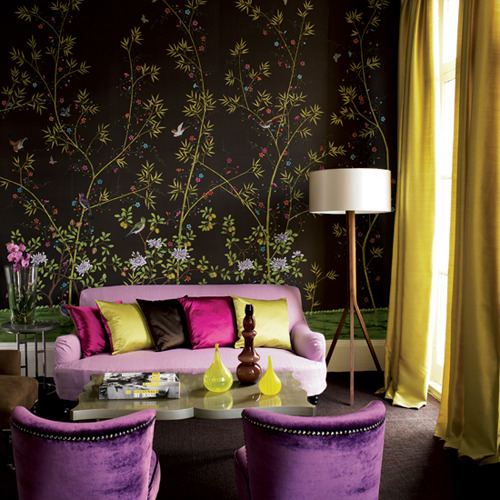
As an Interior Designer, I am asked on a very consistent basis what the rules are when mixing patterns, textures, and colors. I many times say that there are no “rules” per say, just good design plans. For many, it can be overwhelming to mix many colors together or to add patterns into a space. I feel this leads many to staying with a very neutral color palette with little to no pattern, not venturing far from their comfort zones. For example, even though someone may love pink, they would never think of introducing the color into their decor. My advise is to find a designer whom you feel you click well with and who will understand your concerns and limitations. Maybe your love of pink can find a beautifully designed place in your home.

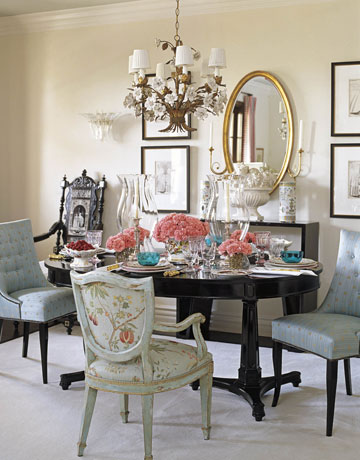
Below are some examples of mixing patterns, textures, and colors. Get ready to be inspired!


historical interior design by mandi maurer gray

Historical interior design is an interesting facet of the design world. Interior design by nature is using one’s creative skill set and style to produce beautiful interiors. Interiors that are set apart from all others through the work of the interior designers’ interpretation of their clients’ personal style. This all becomes more of a challenge when working specifically on historical interiors. I have had the privilege to work on Frank Lloyd Wright homes, along with other known historical home styles. These projects were inspiring to a point, but also limiting to a point. After all, I am the interior designer of a project whose job is to design a specific space historically accurate of what another designer/architect would have done. This seems that it would lend itself to some stifling of creativity, and in part, it does, but it also lends itself to reaching further than I had ever before reached into my creative fault and bring out something that makes the client, myself, and the original designer/architect proud.

Designing for historical residences has a couple of inherent challenges: 1) The homeowner has chosen to live in a historic home for a reason. They love the design of the home and want to keep the original concept alive. This includes the designer doing much research into the time period, designer/architect, and clients’ sense of style. How do they want their personality to show, along with the historic intent? 2) How does the designer create a historically accurate, yet fresh concept for the homeowner? How will others be able to see the designers style shine through while meeting all other criteria? 3) Are there restrictions placed by the city or village where the property is located in terms of the design of the home? Will the designer have to propose and have approved their design intentions to a committee in order to begin work?

Along with the challenges, come the rewards, of course. The designer becomes an investigator into the past. Into another time period and the intentions of past designers and architects. The designer is able to discover past inspirations that are able to be spotted throughout the home. Mouldings, casings, paint color, built-ins, radiator covers, door styles, location of rooms, etc…all have intentional designs and locations. Finding out these intentions is fun and becomes such an interesting challenge to incorporate the new designers interpretations.

I must say that I have had many intense and amazing historical design projects throughout my career that give me joy to think back on. One of the best compliments a client has given me was to say that many of their guests asked if the additions I had incorporated into the home were original. I told the client to start saying, yes, in fact they are. Why not, keep the mystery alive!

Before: fireplace addition and historical remodel of Bungalow

After: fireplace addition and historical remodel of Bungalow

Working With An Interior Designer by Victoria Dreste
Gone are the days of the interior designer who comes sweeping into your home declaring everything hideous and demanding the removal of everything you own.

Today a designer is more likely to meet with you, ask questions about your likes and listen carefully to what you have to say, helping you to discover your personal style.

If you are the kind of person who finds it difficult to communicate what you like but are definite about what you do not like, good. That is a great place to start.

Your sofa doesn’t have to look like every other sofa you see. Furniture, area rugs and window treatments can all be produced to exact specifications. A professional will design and customize your home to define and achieve your style.

Working with a designer gives you the opportunity to purchase from sources that are specific to designers and architects. This bedroom has fabrics and wall coverings from Osborne & Little.

This gorgeous bedroom was customized with the client’s collection of framed botanicals. I also love the rustic beams with the sophisticated chandelier.

This living room setting includes furniture with custom finishes. Selecting specific finishes allows you to design the exact look you want for your home. 

In this sitting room new furniture is mixed with vintage to create a slightly bohemian style.

A mix of furniture and fabrics create a chic dining style. 

With the guidance of an interior designer you can have a home that is your personal style.

You can see more of Vicki’s work here.

creating a home by mandi maurer gray

Choosing a home and creating a personal space, a sanctuary to call one’s own, can be such an intensely amazing, yet sometimes overwhelming experience. It can be compared to choosing what college to attend and later what career path to venture on.

A home is  where the heart is, where our personalities and quirky traits are free to run wild. I tend to feel that we are sometimes missing the true nature of what our homes should represent. They should not be designed solely to enhance future buyers or to function as a sort of museum. Homes are to be lived in and to be part of the memories we create with our family and friends. In a world that is constantly on the go, how do we find a place of calm in our homes at the end of the day.

This is where designers enter the picture. When choosing a designer, I feel it is very important to interview each other to see how well both the client and the designer click, to get a feel for the chemistry between the two. After all, the process of designing your home should be fun, so making sure the designer & client relationship is a good fit will ultimately produce the best possible results.

Once you find the right designer for you, you may want to ask yourself a few questions…

What feel do I want this home to have for both myself, family and company? How do I see the rooms functioning on a daily basis? Is there a focal point to the rooms? Do I want to express myself through lots of color or do I want to keep the overall color scheme neutral and add pops of color through accents and accessories? What do I feel is my personal style? Am I more of a traditionalist or more of a modernist?  What does that mean to me? It may also be a good time to show your designer any inspiration pictures you may have been collecting in order for him/her to get a better feel for the style direction. The design duration lasts as long as it takes to make your space exactly what you had in mind. Your dream home.

Ultimately, the designer’s job is to create peace of mind and a well-designed home that the client is proud to call their own. A home of peace of mind, relaxation, functionality, personal style, and happy memories to come.


“The living space is never unfinished and never finished. It lives with those who live within.” -Josef Frank

“God invented the giraffe, the elephant, the cat. He has no personal style. He just goes on trying things.” -Pablo Picasso


Inspiring Moments by Mandi Maurer Gray

What inspires creative professionals tends to expose itself in our work. We gather images in our memory, which emerge when we are creating. This collection of inspiring moments happens over our entire lifetimes. We constantly add to our bank of images while traveling, shopping, walking through our cities and parks, and while commuting to work.

Inspiration is endless. All we have to do is be open and attune to our surroundings. Taking time to “take in” where we are, what we are doing, and what is all around us. In our busy lives, this can prove to be harder to do than one may think.

This brings me to ask the question…what inspires you? What types of shapes, patterns, colors, textures, smells, appeal to you? I would like to propose a challenge. For one week, carry a journal of some sort with you and document your inspirations. This can be from the smallest spark of intrigue to an overwhelming attraction. This will truly become a journal of insight and self-realization upon review at the end of the week. It may even become a part of daily practice, not to mention, a worthwhile activity for igniting new ideas and creativity in our daily lives & careers as creative professionals.

I encourage anyone who takes part in this challenge to post comments and thoughts regarding their experiences. It will be fun to see what types of images are inspiring to others. In fact, it may even be a way to find new inspiration for ourselves.

march “speakeasy” at Baisch & Skinner

We had such an amazing time at Baisch & Skinner on Wednesday evening!

Lots of new faces and fresh flowers galore!

Thank you to all who came out to learn about the wholesale flower market.  Extremely informative presentation in such a beautiful new space.  A huge thank you to our gracious and entertaining hosts: Tom, Glenn & Margaret!

Tom, Margaret & Glenn from Baisch & Skinner

designspeak banner

welcome design friends!

The Linda Kay Learning Center, located on St. Louis’ historic Floral Row, is now available for upcoming events.

For more information, please contact Glenn at Baisch & Skinner.

entrance to building

I like how the branches create an entrance to the space!

Ready for people!

The ceiling is beautiful!

Showcase for our surprise raffle.

We raffled this vase & flowers!

Zaximo Studios was our surprise raffle

Here is a close up of one of her new pieces.  For more information, please visit her online gallery.

Beautiful detailing

Everyone had a great time meeting new people and admiring all the arrangements on display!

Off for a Behind-the-Scenes tour!


Lovely display of flowers!


Chris is the lucky winner!

Some guests even won roses on the tour!

Michelle of Zaximo Studios (left) and a new fan!

Thanks everyone for a fantastic evening!  Look for more details about the April event coming soon!

Q & A with an Interior Design Student by Mandi Maurer Gray


Lea’s work…Living Room Perspective

I recently met with Lea Cummins, a senior in the Interior Design program at SIBA (Stevens Institute of Business & Arts…formerly known as Patricia Stevens. I asked her some questions that have been brewing in my mind for quite a while now regarding the level of preparedness an interior design student feels as they are approaching graduation.

Has the school in which the interior design student is attending made them adequately prepared to face the competitive world of Interior Design?

I also gave Lea the opportunity to ask me, as a professional Interior Designer, any questions she may have regarding the industry. Below is our conversation and my answers to her questions.

(MANDI) How prepared do you feel you are to take on the real world of Interior Design, outside of the confinements of a scholastic atmosphere?

(LEA) I do feel prepared to be working in the field. I actually worked for Wright’s Furniture and Flooring in Dieterich, Illinois (near my hometown) right after I graduated high school and up until moving to St. Louis in October of 2009. So when I started interior design school I actually felt ahead of the game. I had taught myself so many things and learned so much about products out in the industry that when I was taking my first few classes on materials and practices of design I was really in sync with what was going on.

(MANDI) How do you set yourself apart from design trends and what your colleagues are working on?

(LEA) I have really forced myself to try to think out of the box on my projects. I absolutely am a CAD and Photoshop lover and I also love doing Illustrations and perspectives! I know that to sell any project it is always beneficial to have more elevations, more perspectives, etc. to be able to explain and show the client your ideas.

(MANDI) In what ways do you feel ill-prepared for working in the Interior Design Industry?

Lea’s work….Wine Bar

(LEA) It can be a big challenge in school to balance out all of your projects, which is a question I have for the professionals. How do you balance them? As a student at SIBA I have 10 weeks from the time I am given my project assignment until my presentation. I have always just juggled back and forth in between my projects doing all my floor plans, then choosing fabrics, etc., and although I do always get everything done. It’s in that last week that I’m still pulling all nighters to finish everything up. Is there a better way?

(MANDI) When you are working on multiple clients’ projects, which you will be doing on a very consistent basis as an Interior Designer, these projects are rarely at the exact same point in the design process. This is one way that having multiple projects can be manageable, each project is focusing on something entirely different. Another aspect to consider is that you will no longer have the extra small assignments (which take up any extra time you may have) that your professors may give you. When you are working on your clients’ projects, they are your main concern and job. Lastly, you will have to come up with your own system for balancing out your clients’ projects. Each of us works differently and you will have to figure out how you work best to manage your time and get your work done on a timely basis while balancing your family, friends, and other activities.

(MANDI) Do you have any other questions for me?

(LEA) A question I have is when an Interior Designer is running their own company, how long did it take you to get there? What kind of companies did you work for before getting to your ideal job position?

(MANDI) While I was attending design school, I worked at a home furnishing rep. firm for a year and a half. I left this company when I was offered a job as a design assistant at an Interior Design firm. I was also able to use this design assistant position as my internship, which gave me the opportunity to learn all I could while I was there, instead of running from that job, to school, to a separate internship. Upon graduation, I was promoted to full-time Interior Designer at this firm. I worked here for 3 1/2 years until I moved here to St. Louis. Once arriving here, I worked the odd job to make money, but immersed myself in the design world and networking. I started my own Interior Design business in October of 2010 and am working on gaining more clientele. The journey is never over and you have to work hard to accomplish your goals. Getting your foot in the door by networking and assisting either at a firm or with an independent Interior Designer will gain you more than you know in this industry.

Lea’s work…Perspective

(LEA) Are there things you feel that you just absolutely cannot learn in a school setting that you must learn out in the field? If so, like what?

(MANDI) What stands out to me most is being on a real field measure with my boss spouting out measurements for me to write down and draw out a floor plan at the same time. It was stressful and scary for me at the time. I later understood that if you are not “thrown into the pit” you will not be able to appreciate the skill and hard work it takes to do this job. Another event that stands out for me is my first client meeting presenting my very first kitchen design. Again, it was scary, but so fulfilling in the end and I learned so much! The difference between presenting to your classmates and professor whom you are familiar with and your first real client is huge.

(LEA) How do you feel is the best way to present your presentation? Is it just the preference of the designer or does it depend on the kind of project you are working on?

(MANDI) I would say it is a bit of both. Each designer will have their own way of presenting to their clients. The presentation process is definitely not like presenting in a school setting. When I was in Interior Design school, we had to make design boards. At this point in my career, I do not make design boards, unless I am just putting together a concept board, which is rare. I usually have most of my items separate from one another and present them to the client as such. I present floor plans first and follow with materials, etc.

(LEA) As I am going into my last year at SIBA I am definitely starting to think about my career and what I’m going to be doing at this time next year. I have big dreams and want to take on the design world. But I feel I am in for a reality check. I think that is one thing I don’t feel prepared for, is the networking part of the business. And it is not that our school hasn’t encouraged us to join ASID and IIDA and attend meetings etc., because I do those things! I just don’t know how to get myself our there when I am in those positions. I still feel like until I have graduated, promoting yourself (or your company) is such a hard thing to do. Am I wrong?

(MANDI) I would say that getting out and networking while you are in school is a great way to get your name out there, get noticed, and show that you are a go-getter. You make a statement about yourself while you are a student and attending networking events that you will do what it takes to succeed in this business and that you are wanting to learn and experience all that you can while you are still attending school. My advice would be to go out there and get noticed!!

To read more about Mandi and her work, visit her website here.

Related Posts Plugin for WordPress, Blogger...